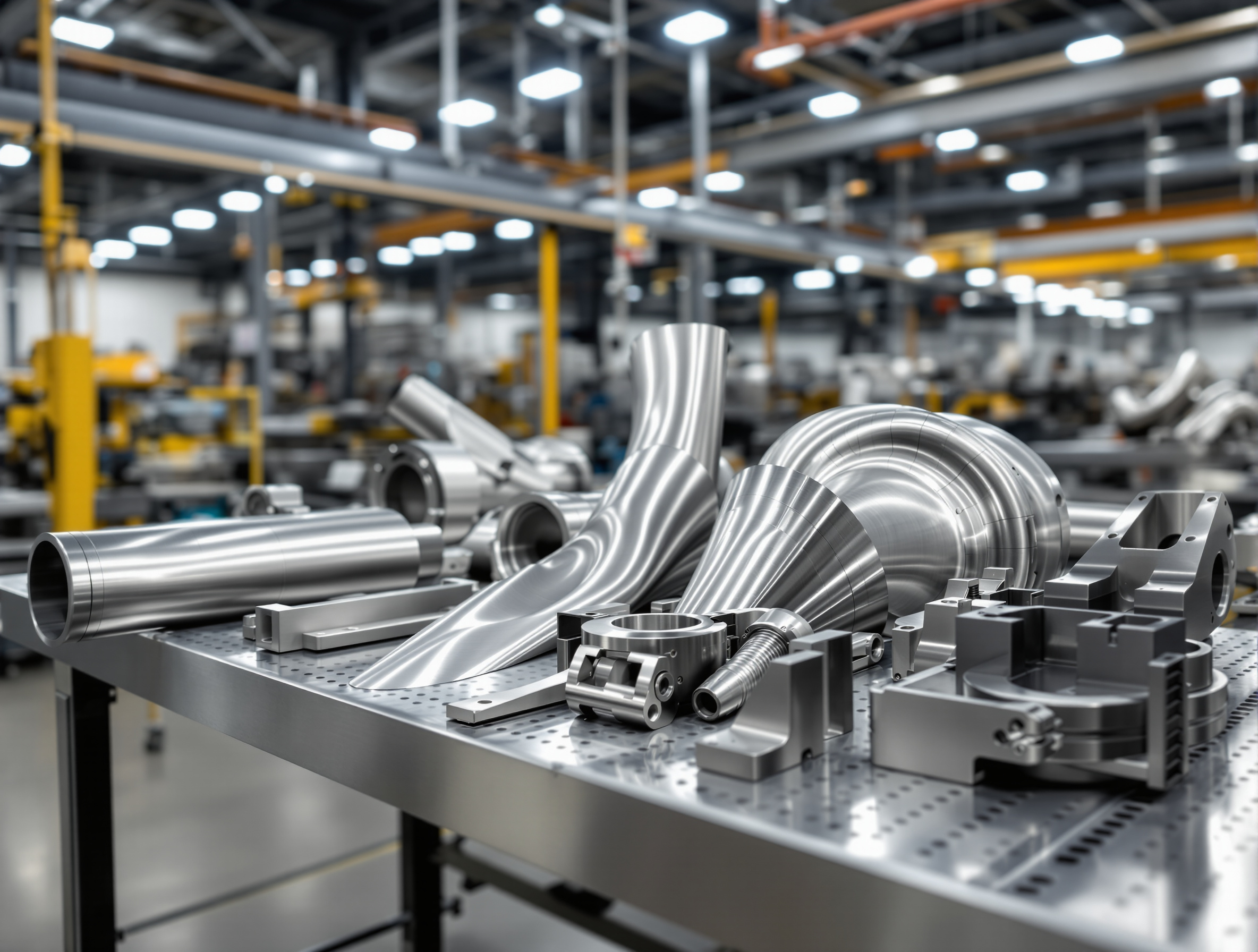
What factors affect the pricing of distribution flanges and pipes in stainless steel, nickel, and titanium?
Pricing for distribution flanges and pipes varies based on several key factors including material grade (304L, 316L stainless, nickel alloys, or titanium 6AL-4V), dimensions, wall thickness, specification requirements (AMS, ASTM, or Military standards), quantity ordered, and current market conditions for raw materials. Nickel alloys like Hastelloy C-276 and Inconel 718 typically command premium pricing due to their superior corrosion resistance and high-temperature performance, while titanium 6AL-4V offers exceptional strength-to-weight ratios at competitive prices for aerospace applications. Additional factors include heat treatment requirements, testing certifications, custom fabrication needs, and delivery timelines. At Aero-Vac Alloys & Forge, we provide transparent, competitive pricing with detailed quotes within 24 hours, helping you optimize your procurement budget while maintaining the highest quality standards for critical piping systems.
What are the key differences between stainless steel, nickel alloy, and titanium pipes for distribution systems?
Stainless steel pipes (304L, 316L) offer excellent general corrosion resistance and are cost-effective for most industrial applications including chemical processing and food & beverage. Nickel alloy pipes like Hastelloy C-276 provide superior resistance to aggressive chemicals, high temperatures, and stress corrosion cracking, making them ideal for harsh chemical environments and oil & gas operations. Titanium 6AL-4V pipes deliver exceptional corrosion resistance, outstanding strength-to-weight ratios, and biocompatibility, perfect for aerospace, marine, and pharmaceutical applications. Each material has distinct mechanical properties, temperature limitations, and welding considerations. Our technical team can help you select the optimal material based on your specific operating conditions, pressure requirements, corrosive media exposure, and budget constraints.
Can you provide custom fabrication services for distribution flanges and piping systems?
Yes, Aero-Vac Alloys & Forge offers comprehensive custom fabrication services for distribution flanges and piping systems in stainless steel, nickel alloys, and titanium. Our capabilities include precision cutting to length, custom threading, orbital welding, flange attachment, pressure testing, and specialized heat treatment to meet your exact specifications. We work with seamless and welded tubing, hydraulic lines, and pipe assemblies manufactured to AMS, ASTM, and Military standards. Our ISO 9001 and AS 9100 certified facility ensures rigorous quality control throughout the fabrication process, with full material traceability and documentation. Whether you need prototype quantities or production runs, our experienced metallurgists and fabrication experts collaborate with your engineering team to deliver custom solutions that meet demanding dimensional tolerances and performance requirements for critical distribution systems.
Which industries commonly use distribution flanges and pipes in these advanced materials?
Distribution flanges and pipes in stainless steel, nickel, and titanium serve critical applications across multiple industries. Oil & gas operations utilize these materials for downhole equipment, refinery piping, and offshore platforms requiring corrosion resistance in harsh environments. Chemical processing plants depend on nickel alloys and stainless steel for handling corrosive chemicals and high-temperature processes. Aerospace manufacturers specify titanium 6AL-4V for hydraulic systems, fuel lines, and structural components where weight reduction is crucial. Pharmaceutical facilities require high-purity stainless steel tubing for sanitary applications and clean room environments. Power generation plants use these materials for boiler tubes, heat exchangers, and high-pressure steam systems. Marine applications benefit from titanium's exceptional saltwater corrosion resistance, while food & beverage processing relies on sanitary-grade stainless steel piping systems.
What certifications and material test reports do you provide with distribution flanges and pipes?
Every order of distribution flanges and pipes from Aero-Vac Alloys & Forge includes comprehensive material certifications and documentation to ensure full traceability and compliance. We provide certified mill test reports (MTRs) detailing chemical composition, mechanical properties, heat treatment records, and lot traceability for all stainless steel, nickel alloy, and titanium materials. Our products meet or exceed AMS, ASTM, and Military specifications with third-party testing verification when required. Additional certifications available include NACE MR0175/ISO 15156 for sour service applications, ASME certification for pressure vessel components, EN 10204 3.1 or 3.2 inspection certificates, and specialized testing such as positive material identification (PMI), non-destructive testing (NDT), and hydrostatic pressure testing. As an ISO 9001 and AS 9100 certified supplier, we maintain rigorous quality management systems ensuring every product meets your exact specification requirements with complete documentation packages.
How do corrosion resistance ratings compare between different material grades for distribution piping?
Corrosion resistance varies significantly across material grades for distribution piping applications. Type 304L stainless steel offers good general corrosion resistance in mild environments but can be susceptible to chloride-induced stress corrosion cracking. Type 316L stainless steel, with molybdenum addition, provides enhanced pitting and crevice corrosion resistance, making it suitable for marine and chemical environments. Hastelloy C-276 nickel alloy delivers exceptional resistance to oxidizing and reducing acids, chloride stress corrosion cracking, and high-temperature oxidation, ideal for severe chemical processing conditions. Inconel 718 nickel alloy combines excellent corrosion resistance with high strength at elevated temperatures. Titanium 6AL-4V offers outstanding corrosion resistance in oxidizing, neutral, and mildly reducing environments, particularly in chloride-containing solutions, seawater, and high-purity chemical applications. Our metallurgical experts can conduct corrosion testing and recommend the optimal material grade based on your specific operating environment, temperature range, and chemical exposure conditions.
What welding considerations are important for flanges and pipes in stainless steel, nickel, and titanium?
Welding distribution flanges and pipes in advanced alloys requires specialized expertise and procedures to maintain material integrity and corrosion resistance. Stainless steel 304L and 316L require proper shielding gas, low heat input, and avoidance of sensitization to prevent intergranular corrosion. Nickel alloys like Hastelloy C-276 and Inconel 718 demand stringent cleanliness, proper filler metal selection, and controlled interpass temperatures to prevent hot cracking and maintain corrosion resistance. Titanium 6AL-4V welding requires inert gas shielding (argon or helium) on both sides of the weld, contamination-free surfaces, and specialized purging techniques to prevent embrittlement from oxygen, nitrogen, and hydrogen pickup. Our fabrication team utilizes automated orbital welding systems, qualified welding procedures per ASME Section IX, and certified welders experienced in aerospace and chemical processing requirements. We can provide weld procedure specifications (WPS), procedure qualification records (PQR), and post-weld heat treatment services to meet your specific code requirements.
What are typical lead times for distribution flanges and pipes in these specialty materials?
Lead times for distribution flanges and pipes vary based on material availability, dimensions, and custom requirements. Standard sizes in common stainless steel grades (304L, 316L) are often available from our extensive inventory for immediate shipment or delivery within 1-2 weeks. Nickel alloys like Hastelloy C-276 and Inconel 718 typically require 4-8 weeks depending on size and specification, while titanium 6AL-4V products generally ship within 3-6 weeks. Custom fabrication, specialized heat treatments, or non-standard dimensions may extend lead times by 2-4 weeks. Our strong relationships with certified mills and strategic inventory management enable us to expedite orders when project schedules demand faster delivery. We provide realistic lead time commitments upfront, maintain transparent communication throughout the order process, and offer expedited processing options for critical applications. Contact our team for specific availability on your required specifications, and we'll work diligently to meet your project timeline while maintaining our commitment to quality and certification requirements.