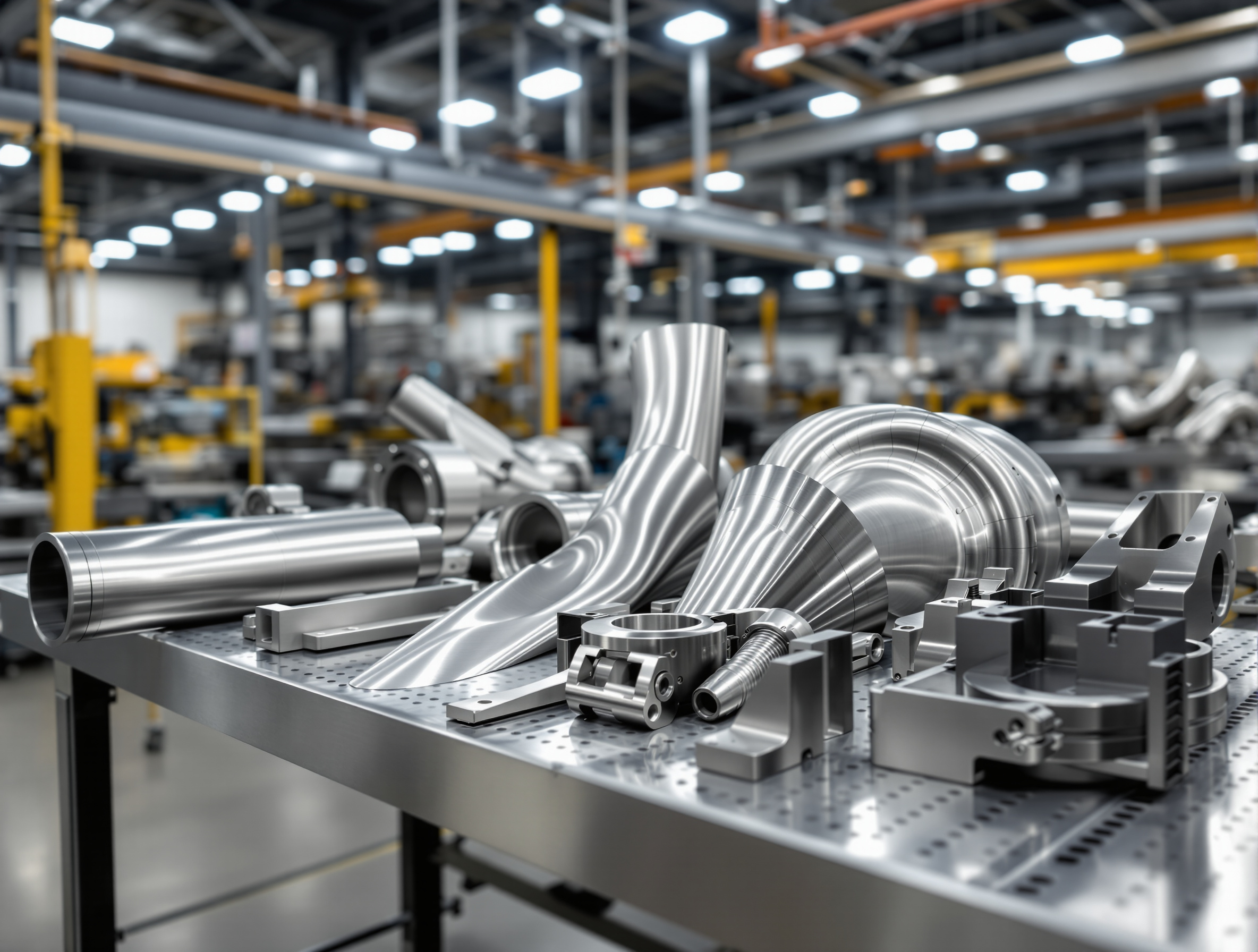
What factors influence the pricing of nickel-chromium-molybdenum alloy precision alloys?
The pricing of nickel-chromium-molybdenum alloy precision alloys like Inconel 625 is influenced by several key factors including raw material costs (nickel, chromium, and molybdenum commodity prices), product form (sheet, plate, bars, forgings), quantity ordered, certification requirements (AMS, Military specifications), material testing and documentation needs, and current market conditions. At Aero-Vac Alloys & Forge, we offer competitive pricing with transparent quotes that account for these variables, and our purchasing power allows us to pass savings directly to our customers. We provide detailed quotations within 24 hours that break down costs and ensure you receive the best value for premium quality nickel-chromium-molybdenum precision alloys that meet your exact specifications.
What are the key differences between AMS 5599 and AMS 5666 specifications for nickel-chromium-molybdenum alloys?
AMS 5599 and AMS 5666 both cover Inconel 625 (62Ni-21.5Cr-9.0Mo composition) but differ in product forms and applications. AMS 5599 specifically covers sheet, strip, and plate forms, making it ideal for fabricated components, pressure vessels, and heat exchangers where flat products are required. AMS 5666, on the other hand, covers bars, forgings, extrusions, and rings, which are used for structural components, shafts, fasteners, and machined parts requiring excellent mechanical properties. Both specifications ensure the same exceptional corrosion and heat resistance characteristics that make nickel-chromium-molybdenum precision alloys essential for aerospace, chemical processing, and marine applications. Our team can help you select the appropriate specification based on your specific component requirements and manufacturing processes.
What makes nickel-chromium-molybdenum alloy precision alloys superior for corrosive environments?
Nickel-chromium-molybdenum alloy precision alloys offer exceptional corrosion resistance due to their unique chemical composition. The high nickel content (typically 62%) provides excellent resistance to chloride-induced stress corrosion cracking and general corrosion. Chromium (21.5%) forms a stable passive oxide layer that protects against oxidizing environments and high-temperature oxidation. Molybdenum (9.0%) significantly enhances resistance to pitting and crevice corrosion, particularly in chloride-containing solutions and acidic environments. This combination makes these precision alloys ideal for seawater applications, chemical processing equipment, pollution control systems, and marine hardware where conventional stainless steels would fail. The alloys maintain their mechanical properties and corrosion resistance across a wide temperature range from cryogenic to 1800°F (982°C).
Can you provide custom sizes and forms of nickel-chromium-molybdenum precision alloys?
Yes, Aero-Vac Alloys & Forge specializes in providing custom sizes and forms of nickel-chromium-molybdenum alloy precision alloys to meet your exact project requirements. We offer precision cutting, machining, and fabrication services for sheet, plate, bars, forgings, extrusions, and rings in various dimensions and thicknesses. Our state-of-the-art equipment and experienced metallurgists can work with you to develop custom solutions including special heat treatments, surface finishes, and non-standard dimensions. All custom products maintain full traceability and can be supplied with complete material certifications including chemical composition, mechanical properties, and compliance with AMS, Military, or other applicable specifications. Whether you need prototype quantities or production volumes, our flexible manufacturing capabilities ensure you receive precision alloys that meet your unique application needs.
What industries commonly use nickel-chromium-molybdenum alloy precision alloys?
Nickel-chromium-molybdenum alloy precision alloys are utilized across diverse industries where extreme corrosion resistance and high-temperature performance are critical. Aerospace applications include jet engine components, exhaust systems, and turbine seals. Chemical processing plants use these alloys for reactor vessels, heat exchangers, and piping systems handling corrosive chemicals and acids. The oil and gas industry employs them in offshore platforms, subsea equipment, and downhole tools exposed to sour gas and seawater. Marine applications include propeller shafts, pump components, and seawater piping systems. Power generation facilities use these precision alloys in nuclear reactors, flue gas desulfurization systems, and steam generators. The pharmaceutical and food processing industries value these materials for their cleanliness, corrosion resistance, and ability to maintain product purity in critical manufacturing processes.
What certifications and quality standards does Aero-Vac Alloys & Forge maintain for nickel-chromium-molybdenum precision alloys?
Aero-Vac Alloys & Forge maintains the highest quality certifications including ISO 9001:2015 and AS 9100 Rev D, demonstrating our commitment to quality management systems for aerospace and precision manufacturing. All nickel-chromium-molybdenum alloy precision alloys are supplied with complete material certifications that include chemical composition analysis, mechanical property test results, heat treatment records, and full traceability to mill test reports. We provide compliance documentation for AMS specifications (5599, 5666), Military specifications (MIL-DTL-24687), and can accommodate special certification requirements including NACE MR0175/ISO 15156 for sour gas service, ASME pressure vessel codes, and customer-specific qualification procedures. Our quality control laboratory performs incoming inspection, in-process testing, and final verification to ensure every shipment meets or exceeds specified requirements, giving you confidence in the performance and reliability of your nickel-chromium-molybdenum precision alloys.
What are the typical mechanical properties and performance characteristics of nickel-chromium-molybdenum precision alloys?
Nickel-chromium-molybdenum alloy precision alloys like Inconel 625 exhibit outstanding mechanical properties including a minimum tensile strength of 120 ksi (827 MPa), minimum yield strength of 60 ksi (414 MPa), and excellent elongation of 30% or greater, providing both strength and ductility for demanding applications. These precision alloys maintain their mechanical properties across an exceptional temperature range from cryogenic conditions up to 1800°F (982°C), making them suitable for both extreme cold and high-temperature service. The alloys demonstrate excellent fatigue resistance, good fabricability through conventional welding and forming processes, and superior resistance to thermal fatigue cracking. In the solution-annealed condition, these materials combine high strength with excellent toughness and can be further strengthened through cold working. The nickel-chromium-molybdenum composition ensures dimensional stability, low thermal expansion, and resistance to stress relaxation at elevated temperatures, critical for precision engineering applications requiring long-term reliability and performance.