
Machine shops serving aerospace, defense, and energy customers face a specific set of headaches: tight tolerances measured in ten-thousandths of an inch, alloys like titanium and Inconel that fight back against every cutting tool, and a constant need for material with AS9100/ISO 9001 traceability paperwork.
This guide breaks down CNC turning versus general machining, the real factors driving precision, why material selection matters as much as machine capability, and how to pick suppliers who won't leave you exposed.
Key Takeaways
- CNC turning shapes cylindrical parts on a rotating workpiece; machining also covers milling, drilling, and grinding
- Standard precision turning holds ±0.002"; critical features often require tighter tolerances
- Material certification and traceability often decide whether a finished part passes inspection
- Suppliers offering both certified material and processing capability cut risk and rework
What Is CNC Precision Turning and How Does It Differ From General Machining?
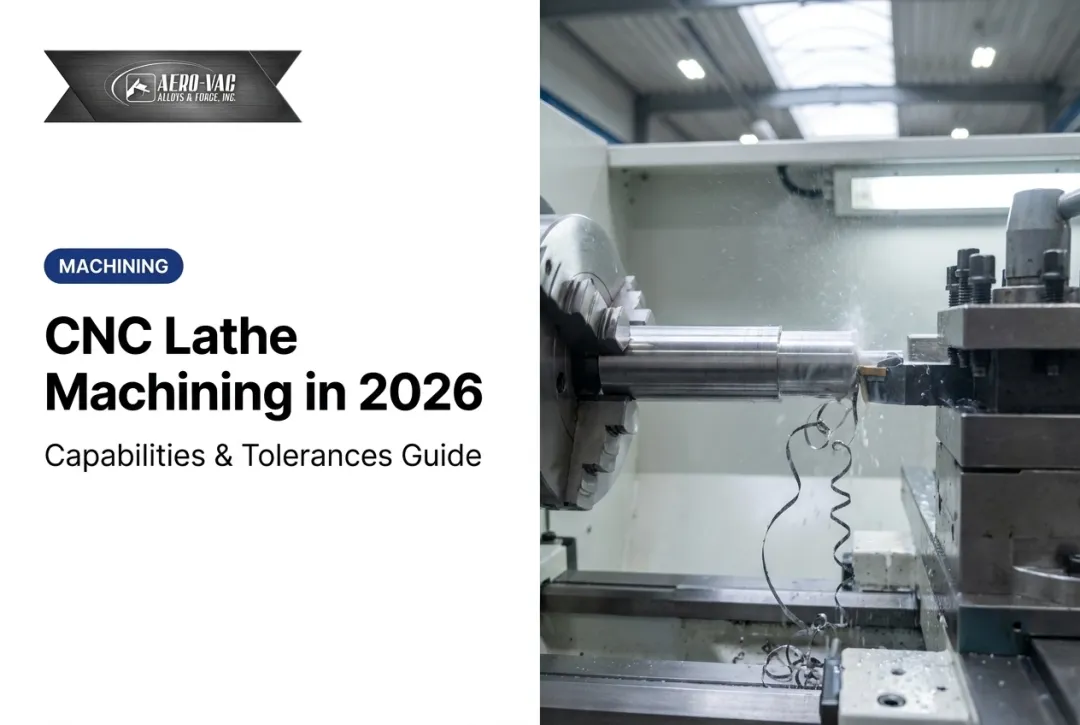
CNC turning rotates the workpiece against a stationary or moving cutting tool. It's the go-to process for shafts, bushings, fasteners, and any part that's fundamentally round.
CNC machining is the umbrella term. It covers turning, milling, drilling, grinding, and EDM — all subtractive processes driven by CAD/CAM-generated G-code rather than a human hand on a lever.
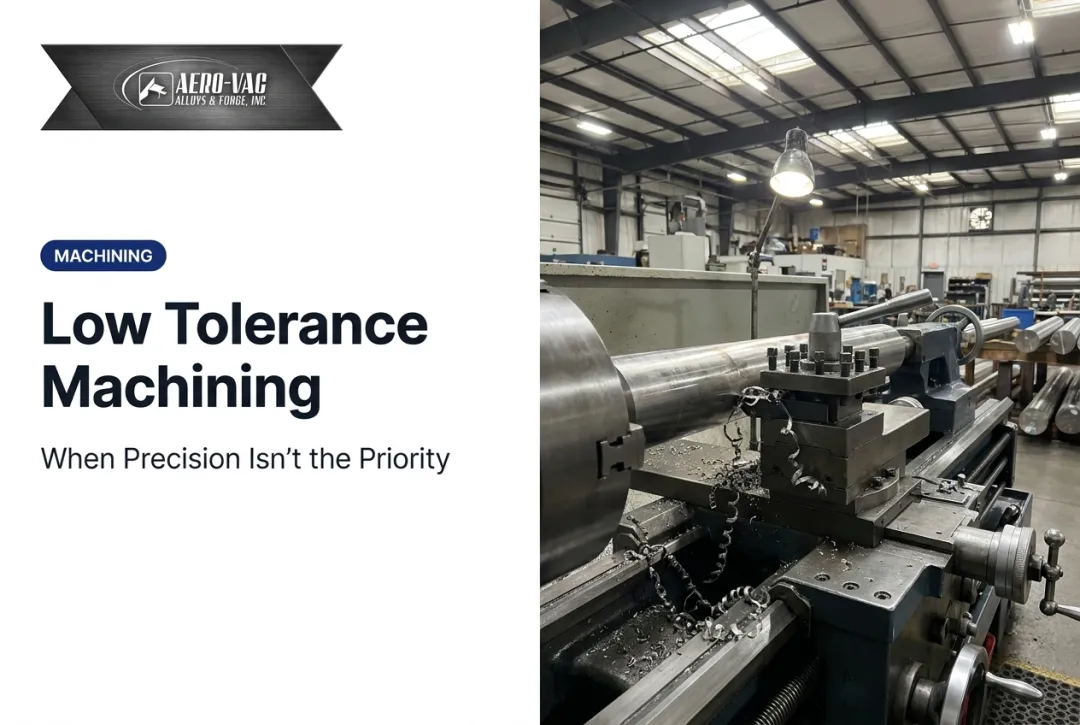
That last distinction matters more than it sounds. Traditional turning on a manual lathe depends entirely on operator skill for every cut. CNC turning removes that variability, running the same program thousands of times with identical results.
How Tight Can CNC Turning Really Get?
Tolerance claims get thrown around loosely in this industry. Here's what's actually documented:
- Standard production machining: ±0.005"
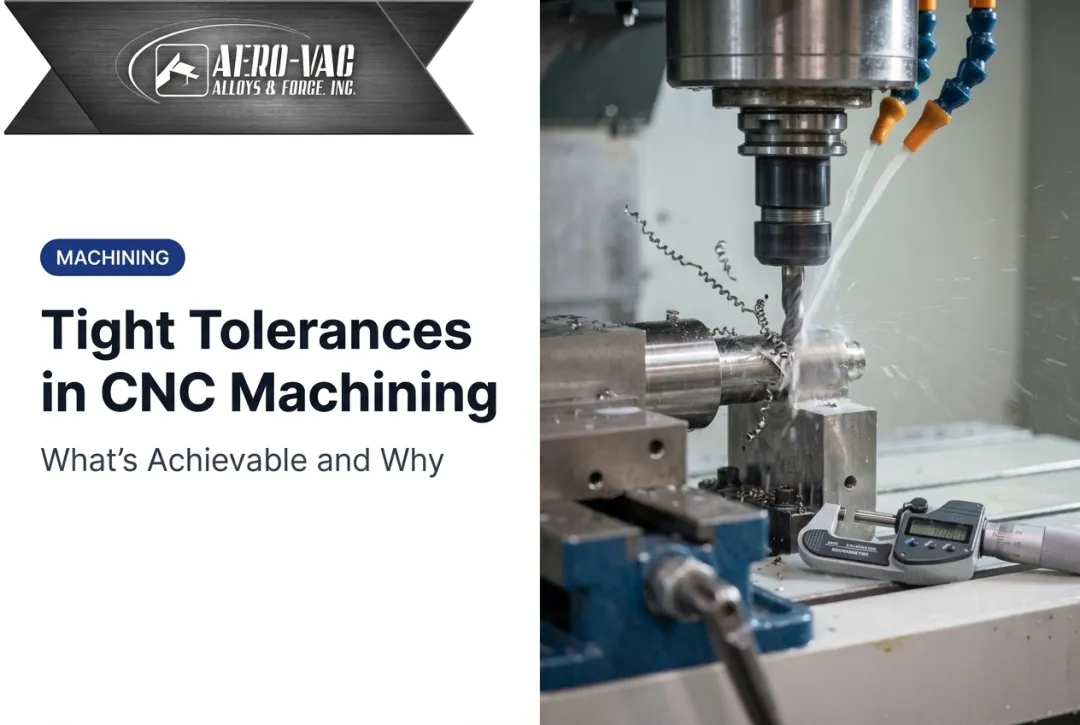
- Precision/production tolerance: ±0.002"
- Reamed holes: as tight as ±0.0005" (Protolabs)
- Spaceflight-grade CNC turning and milling: ±0.0002" (±5 micrometers), per NASA's White Sands facility

There's no single universal number. The right tolerance depends on the part's function, not a marketing claim.
Turning vs. Milling vs. Grinding: Choosing the Right Process
Modern lathes increasingly come with live tooling and mill-turn capability. DMG MORI and Mazak both build turn-mill centers that combine turning and milling on one machine, cutting throughput time and reducing re-clamping errors from moving a part between machines.
Even with that overlap, match the primary process to the geometry:
- Turning — rotationally symmetric parts: turbine shafts, rotor components, bushings
- Milling — complex, non-symmetric geometries: housings, brackets, mounting plates
- Grinding — typically a finishing step after turning, used where roundness and surface finish are critical, such as bearing races
Picking the wrong process for the geometry doesn't just slow things down. It usually means fighting the machine to hold tolerance it wasn't designed to hold.

What Determines Precision and Quality in CNC Turning?
Precision isn't one thing. It's a stack of factors, and missing any one of them undermines the rest.
Three factors sit at the center of that stack:
- Dimensional tolerance — positioning accuracy, shop-floor thermal stability, and tool-wear compensation mid-run
- Geometric accuracy — roundness and cylindricity on rotating components
- Surface finish (Ra) — a fatigue-life variable on load-bearing parts, not a cosmetic choice
Dimensional tolerance control depends on machine positioning accuracy, thermal stability on the shop floor, and how well the controller compensates for tool wear as a cutting edge dulls mid-run.
Geometric accuracy (roundness and cylindricity) is critical for rotating components. Bearing seats are a clear case: SKF specifies shaft seats at IT6 dimensional tolerance with IT5 total runout for normal-precision industrial bearings. Aerospace applications typically demand tighter classes still (SKF).
Surface finish (Ra) isn't cosmetic. A 2021 study on 7N01 aluminum found that polishing a critical corner region improved fatigue life by 18.5% (Zhao et al., 2021). On dynamic, load-bearing components, finish quality is a fatigue-life variable.
The Hidden Precision Factor: Raw Material Consistency
The machine can only work with what it's given. Inconsistent chemical composition, uneven grain structure, or the wrong heat-treatment condition sabotages precision before the tool ever touches the part.
NIST notes that inadequate control of process variability, including material variability, leads directly to scrap, rework, and repair (NIST). Seco Tools echoes this: inconsistent results at any stage can send a finished part straight to the scrap bin (Seco Tools).
A shop can run the best multi-axis turning center on the market. If the bar stock feeding it has inconsistent grain structure, that precision is wasted.

Why Material Selection Is the Foundation of Precision Machining Success
No amount of machine sophistication fixes bad material. Wrong-spec stock, uncertified alloy, or inconsistent chemistry shows up as tool wear, part deformation, or an outright rejection at inspection.
Difficult-to-machine alloys compound the problem. Titanium's low thermal conductivity pushes heat into the cutting tool instead of away from it, while its high strength drives up cutting forces (Kennametal).
Inconel 718 brings severe work hardening and rapid tool wear, forcing slower speeds and more frequent tool changes (Zhuang et al., 2023). Machining these alloys well requires both machinist skill and material that's exactly what the spec says it is.
This is where a manufacturing distributor earns its keep. Aero-Vac Alloys & Forge, an AS9100 and ISO 9001-certified distributor, stocks more than 150 aerospace-grade alloy specifications, including:
- Titanium: AMS 6931 (Ti-6Al-4V / UNS R56400 / ASTM Grade 5), AMS 4928, and 10V-2Fe-3Al grades under AMS 4984, 4986, and 4987
- Nickel alloys: including Inconel 718 tubing
- Steel: 4340 and ASTM A304 bar stock
- Aluminum: 2024, 7050, 7075, and related high-strength grades
Beyond raw stock, Aero-Vac provides:
- In-house saw cutting for custom sizes
- Thermal processing to bring material to spec condition
- Partnerships with NADCAP-certified heat treaters and testing labs when volume or turnaround demands it

For a machinist facing a custom cut or odd size, that means not waiting on standard mill lead times just to get started.
How Is CNC Turning Cost Calculated and What Drives It Up or Down?
Turning cost isn't a mystery formula, but it does stack up fast. Most shops build the quote as machine rate × cycle time, plus material, tooling, and amortized setup. The main drivers:
- Material cost and grade — exotic alloys cost more per pound and take longer to machine
- Machine/cycle time — governed largely by material hardness and part design
- Tolerance and finish requirements — tighter specs mean slower feeds and more passes
- Batch size — setup cost gets spread across more parts in larger runs
- Setup complexity — fewer setups can cut setup time by half or more

Tighter tolerances and harder alloys drive costs up because they force slower feeds, slower speeds, and faster tool wear (Thomasnet, 2020). That's unavoidable physics, not a pricing markup.
What is controllable: starting with pre-certified, correctly-specified material. Stock that arrives with verified chemistry and the right diameter cuts down on setup time and eliminates the scrap risk that comes from discovering a material problem mid-run.
Frequently Asked Questions
What is the difference between CNC turning and turning?
Traditional turning uses a manual lathe guided entirely by an operator's hand and judgment. CNC turning replaces that with computer-controlled programming, delivering repeatable precision across an entire production run without operator-to-operator variation.
How do I calculate CNC turning cost?
Cost comes from material price, cycle time, tolerance and surface finish demands, tooling requirements, and order volume. Tighter specs and harder alloys push the price per part higher due to slower machining and faster tool wear.
What tolerances can CNC precision turning achieve?
Standard production machining typically holds ±0.002", with reamed features reaching ±0.0005". Spaceflight-grade work has been documented at ±0.0002". The right tolerance depends entirely on the part's function.
Which materials are hardest to machine in CNC turning?
Titanium and Inconel top the list. Both generate excessive heat, cause rapid tool wear, and work-harden during cutting, requiring specialized speeds, feeds, and tooling to avoid part damage.
Why does material certification matter for precision machined parts?
Certified, traceable material backed by mill certs and chemical/mechanical test reports confirms the finished part meets design specs. Under AS9100D, aerospace and defense work requires that traceability from mill to finished component (SAE International).
How do I choose a reliable supplier for precision turning materials?
Check certifications (ISO 9001, AS9100), material traceability practices, availability of technical support, and delivery reliability. A supplier who can talk through an odd-size cut or unusual spec, not just quote a price, saves headaches later.