
Here's the good news: forging and machining aren't rivals fighting for your purchase order. They're usually partners. Most high-performance parts — gears, shafts, aircraft structures — start as a forging and finish on a CNC machine.
This guide breaks down what each process actually does, how they compare on strength and cost, the four main forging types, and how to source the right alloy stock before you commit to either route.
Key Takeaways
- Forging aligns internal grain flow for superior fatigue and impact resistance
- Machining delivers tight tolerances and complex geometry beyond what forging can deliver alone
- Open-die, closed-die, roll, and upset forging each fit different part sizes, volumes, and shapes
- Most forged parts still need finish machining on critical surfaces like bores and threads
- Sourcing certified, traceable alloy stock matters as much as picking the right process
What Is Forging?
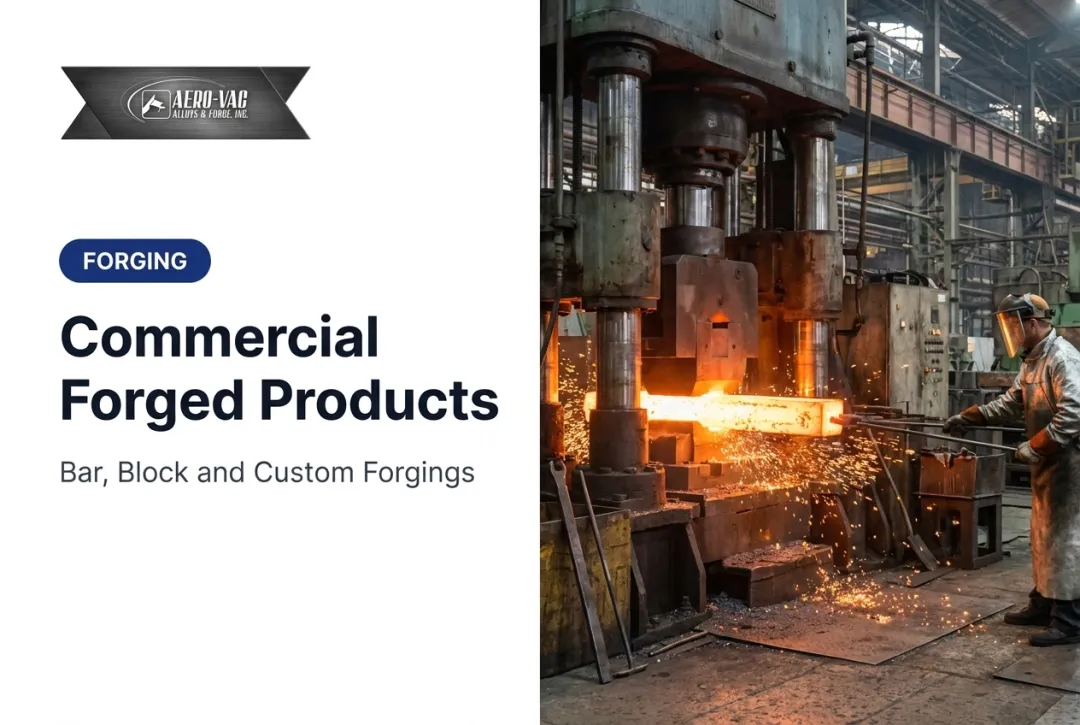
Forging is a compressive process. You squeeze, press, or pound metal under enormous force until it takes shape, without melting it. That compression does something machining can never do: it aligns the internal grain structure along the part's stress lines, according to the Forging Industry Association.
Three temperature categories matter here:
- Cold forging — performed near room temperature
- Warm forging (steel) — roughly 1,000°F, below the recrystallization threshold
- Hot forging (steel and nickel alloys) — typically 1,700–2,300°F, with nickel-based superalloys forged in the 1,200–2,250°F range
Forged parts are standard in high-stress industries: aerospace, defense, oil and gas, and power generation. These sectors can't afford a part that cracks under cyclic load.

None of this works without the right starting material. Forging requires certified, traceable alloy steel or superalloy billet — not scrap-grade stock. A forging is only as good as the metal that goes into the die.
What Is Machining?
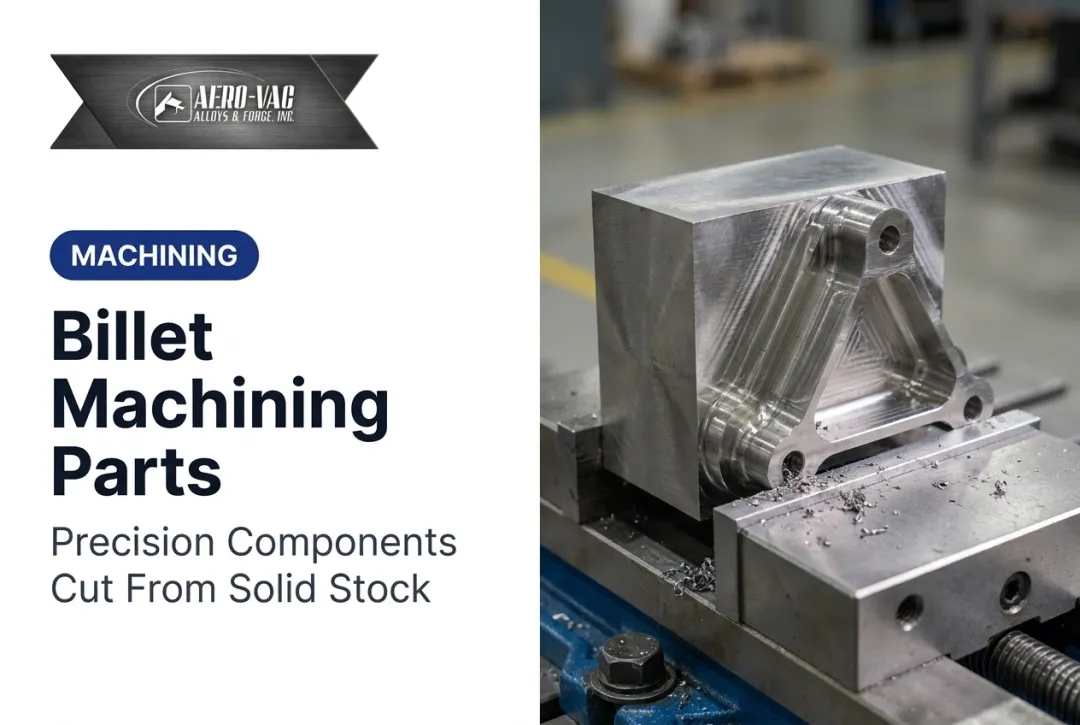
Machining is subtractive manufacturing. CNC mills, lathes, and grinders cut away material from a billet or a forged blank until only the final shape remains.
Where Machining Wins
Precision. As-forged surfaces are rough and dimensionally loose by comparison. According to Protolabs, standard CNC machining holds tolerances around ±0.005 in., with precision work tightening to ±0.002 in. and reamed holes reaching ±0.0005 in.
Forgings carry historical tolerance guidelines that vary by part size and geometry. Per the FIA's own design guide, buyer and supplier negotiate exact tolerances on a part-by-part basis.
One thing machining cannot do: improve internal grain structure. Cutting metal doesn't strengthen it; it just shapes it. The FIA notes that machined bar or plate can be more susceptible to fatigue and stress corrosion, because the cutting process severs the grain pattern rather than following it.
Forging vs Machining: Strength, Precision, and Cost Compared
This is the question every buyer eventually asks: which one is actually stronger?
Strength and Fatigue Resistance
Forged parts consistently outperform machined-from-billet parts in fatigue-critical applications. The clearest published data comes from gear manufacturing.
Gear Solutions reports that near-net forged bevel gears show 6-10 times better impact and fatigue resistance than cut gears. A cited 1997 study found forged spur gears with 12.5% higher bending fatigue strength (through-hardened) compared to cut teeth.
These figures are gear-specific, but the underlying principle holds across forged components generally: aligned grain flow resists cracking under repeated stress.
Precision and Geometry
Machining takes this category outright. Intricate features, tight-tolerance bores, and thin-wall sections belong to CNC work, not as-forged surfaces.
Material Utilization
How much metal you pay for—and how much ends up as scrap—differs sharply:
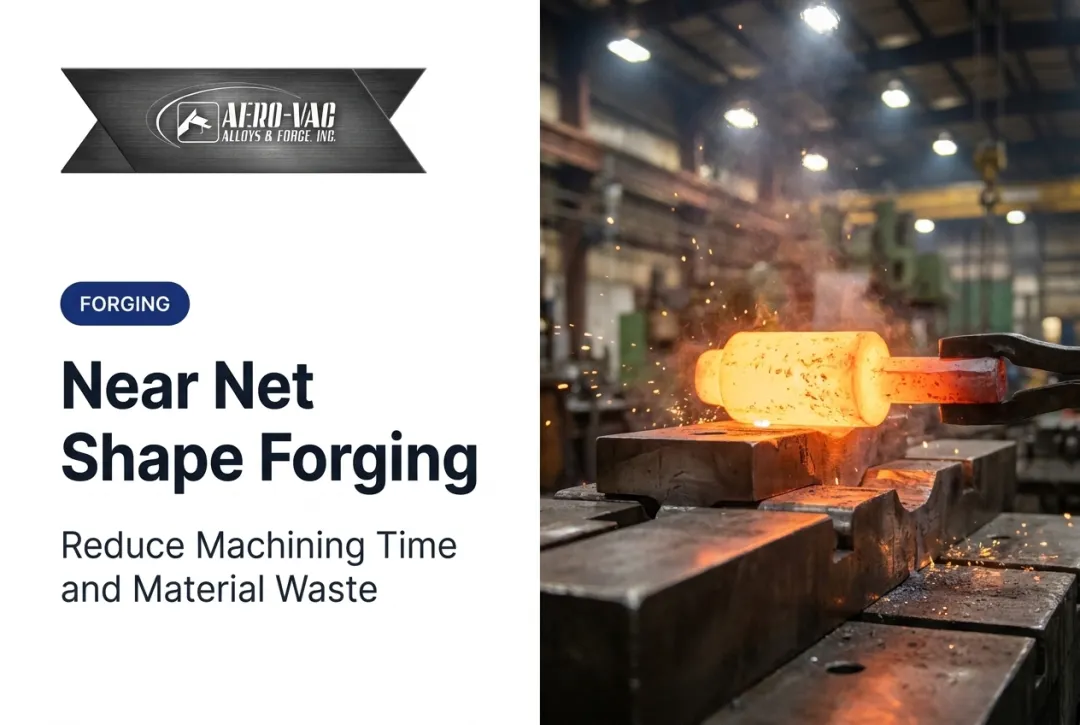
- Forging is near-net-shape, generating minimal scrap
- Machining removes substantial stock as chips, especially on complex geometries cut from solid billet
Cost by Volume
| Factor | Forging | Machining |
|---|---|---|
| Tooling cost | High upfront (dies) | None |
| Per-part cost at scale | Drops sharply with volume | Stays relatively flat |
| Best fit | High-volume production runs | Low volume, prototypes |

The Forging Industry Association (FIA) confirms the pattern: as quantity rises, lower finish-machining time on a near-net forging offsets the higher upfront die and processing cost.
So, Which Is Stronger?
It depends on the load, not just the metal. Forging wins decisively for fatigue-critical, cyclic-load parts — think landing gear, turbine discs, gears. Machined-from-billet parts perform well for static-load, precision components where fatigue isn't the primary concern.
For most critical aerospace and defense hardware, the industry doesn't pick one — it uses both. Forge the blank, then finish machine it. That hybrid route is the industry standard.
The Four Types of Forging Explained
Four primary forging methods shape metal stock into finished or near-net forms. Each fits different part geometries, production volumes, and tolerance needs.
Open Die Forging
The workpiece sits between flat, V-shaped, or contoured dies and moves freely as it is shaped. It suits large, relatively simple parts such as shafts, discs, and rings, where flexibility matters more than tight tolerances.
Closed Die (Impression) Forging
Matched dies with a machined cavity fully enclose the workpiece. Metal flows to fill the die impression, producing complex shapes with tighter as-forged tolerances than open-die work. Tooling costs run higher, but so does repeatability.
Roll Forging
Heated bars or billets pass between contoured rolls that simultaneously reduce cross-section and change shape. This process suits elongated parts with varying cross-sections along their length, such as axles or leaf springs.
Upset Forging
This process increases the cross-section at one end (or along a section) of the stock through axial compression. It is the backbone of fastener and bolt manufacturing, where you need a larger head or flange on an otherwise uniform shaft.

How Forged Parts Are Machined (Machined Forgings Explained)
A machined forging is a forged blank that goes through CNC finish machining to hit final dimensions and surface finish. Per ASTM's Manual 53, most closed-die forgings need at least some machining, and open-die forgings generally need more extensive finishing.
Typical Machining Sequence
Finishing work usually follows four stages:
- Remove forging scale and decarburized skin. Skip this and the hardened oxide layer chews through cutting tools, raising scrap rates and tooling costs.
- Rough machine toward near-net shape, leaving stock for finish passes and any heat-treat movement.
- Finish machine critical diameters, faces, threads, and surface finish to print.
- Inspect dimensions and run required NDT before the part moves downstream.

Clean starting stock makes every step above more predictable. Defects buried in the billet show up as tool breakage, scrap, or failed ultrasonic checks after you have already invested machine time.
Why Certified Stock Matters
Sourcing forging-grade alloy steel with verified quality documentation cuts guesswork out of speeds, feeds, and inspection planning. A buyer machining a forged blank needs confidence the billet was clean and defect-free before it went into the die.
Aero-Vac Alloys & Forge supplies ISO 9001:2008-registered, AS9100-compliant alloy steel forging stock and bar stock to aerospace, defense, and energy customers, with independent third-party testing (including ultrasonic inspection under MIL-STD-2154 and AMS 2631) to confirm conformance before shipment. The company also machines in-house to semi-finished and near-net-shape condition and offers open-die forging from high-cleanliness melt stock when grain structure and fatigue strength are critical.
Choosing the Right Process for Your Application
Choose forging when:
- Parts face cyclic loading or high stress (gears, shafts, bearings)
- Safety-critical performance is required (aircraft structural components)
- Fatigue and impact resistance outweigh tolerance precision
Choose machining when:
- Parts need tight tolerances or complex geometry
- You're producing small batches or prototypes
- Tooling investment isn't justified by volume
Choose the hybrid approach when:
- You're building structural aerospace, defense, or heavy industrial parts
- You need both fatigue resistance and precision fit on the same part
- Volume supports forging dies, but final dimensions still require CNC
For Aero-Vac customers in gears, bearings, aircraft, rocketry, and power generation, the hybrid path is the norm. A 4340 forged shaft blank, for instance, still needs finish machining on bearing seats before it's flight-ready.
Frequently Asked Questions
Which is stronger: forged parts or machined parts?
Forged parts are generally stronger in fatigue-critical applications because compression aligns the grain flow along stress lines. Machined-from-billet parts have good strength too, but the grain isn't aligned to the load path, so forging wins where cyclic stress is a factor.
What are the key differences between CNC machining and forging?
Forging shapes metal under compressive pressure; machining is subtractive and cuts material away. Forging improves fatigue strength through grain alignment, while machining offers tighter tolerances. Forging tooling costs more upfront but pays off at volume; machining has no tooling cost but higher per-part costs at scale.
What is machined forging?
It's a forged blank that undergoes CNC machining afterward to reach final dimensions, tolerances, and surface finish. Most closed-die and open-die forgings need some level of this finishing work.
What are the four types of forging?
Open-die (flexible shaping for large, simple parts), closed-die (die-cavity filling for complex geometry), roll forging (elongated parts with varying cross-sections), and upset forging (increasing cross-section at one end—common in fasteners).
Do forged parts always need additional machining?
Almost always, yes. Critical surfaces like bearing seats, threads, and mating faces need machining to hit final tolerance and surface finish, even on a well-designed near-net forging.
Where can I source certified alloy steel for forging or machining projects?
Aero-Vac Alloys & Forge supplies ISO 9001:2008- and AS9100-certified alloy steel stock for forging and machining, backed by material testing and fast RFQ turnaround for aerospace, defense, and energy customers.