
Here's the problem. Many engineers and procurement teams treat "forged plate" and standard "rolled/mill plate" as interchangeable terms. They aren't. That confusion leads to material selection mistakes that show up later as fatigue cracking, warranty claims, or worse.
This guide breaks down what plate forging actually is, how it's produced, how it stacks up against rolled and machined alternatives, and how to source it without gambling on quality.
Key Takeaways
- Forging compresses metal and aligns grain flow, boosting strength and fatigue life beyond rolling or machining
- Open-die, closed-die, press, and isothermal forging match different plate sizes, tolerances, and geometries
- Aerospace, defense, oil & gas, and power generation depend on forged plate for safety-critical parts
- Verify ISO 9001/AS9100 certification to confirm forged plate traceability and quality before you buy
What Is Plate Forging?
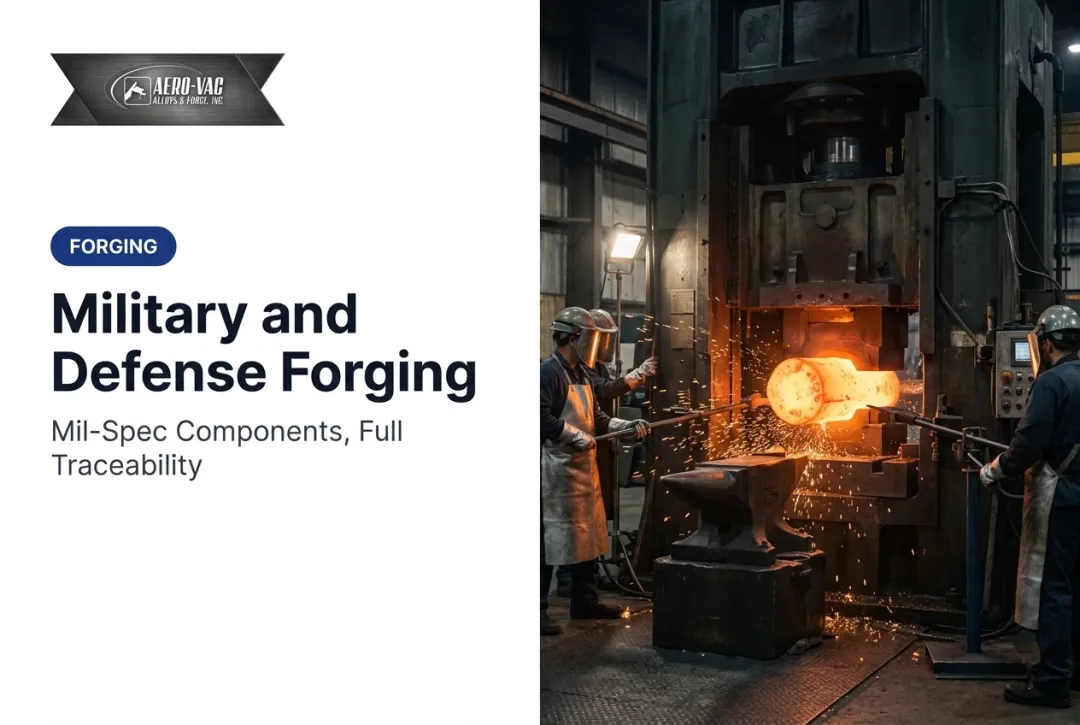
Plate forging shapes metal stock with compressive force—applied by hammering or pressing—rather than by casting or simple rolling. The process typically involves heating the metal (hot, warm, or cold forging) and applying pressure that physically reorganizes the internal grain structure to follow the part's shape. This is the critical distinction buyers miss: rolling reduces thickness, but it doesn't refine grain flow the way forging does. Rolled plate has a linear grain pattern baked in during manufacturing. Forging actually reshapes that grain to match the geometry of the finished part. Common alloys processed through plate forging include:
- Carbon steel
- Alloy steel
- Stainless steel
- Titanium
- Nickel alloys
Why Grain Structure Matters
According to the Forging Industry Association, forging generally produces grain structure oriented to the part's shape, providing optimal strength, ductility, and resistance to both impact and fatigue. Machined bar and plate, by contrast, can be more susceptible to fatigue and stress corrosion because machining cuts straight through the existing grain pattern rather than working with it. A 2005 ASM Handbook chapter on forging design confirms the mechanism: correct parting-line placement aligns the principal grain-flow direction with the part's main service-loading direction. In plain terms, forging lines up the metal's internal "grain" with the direction of the forces the part will actually experience in service. That's the whole point.

Plate Forging Methods and Process Steps
The core forging sequence follows these steps:
- Cut and heat the billet to the correct forging temperature
- Forge the metal using hammering or pressing
- Trim the flash (excess material pushed out during forming)
- Heat treat to achieve the specified mechanical properties
- Finish through machining, grinding, or inspection

Open-Die Forging
Flat or simple-shaped dies shape the metal freely, without a precut profile. This method suits large, custom, or simple plate geometries. The Forging Industry Association (FIA) notes open-die forgings can range from a few pounds to more than 150 tons, making it the preferred method for oversized or one-off components.
Closed-Die (Impression-Die) Forging
Metal is confined between two dies that contain a precut profile of the desired shape. Closed-die forging delivers tighter tolerances and more complex profiles than open-die methods, at the cost of more expensive tooling.
Press Forging
Instead of hammer impact, press forging uses continuous, controlled vertical pressure. This produces more uniform internal deformation and better dimensional accuracy, particularly valuable for thicker plate sections where hammer forging might not fully work the core material.
Advanced Techniques
Isothermal forging heats the dies to match the blank's temperature before working it. That match reduces stress fields and temperature gradients at the tool-workpiece interface and improves material flow.
Precision forging extends closed-die work further. It reaches shape accuracy and surface finish tight enough to eliminate some post-forging machining steps entirely.

Plate Forging vs. Rolled Plate vs. Machined Bar/Plate
The comparison boils down to grain orientation, cost, and application fit.
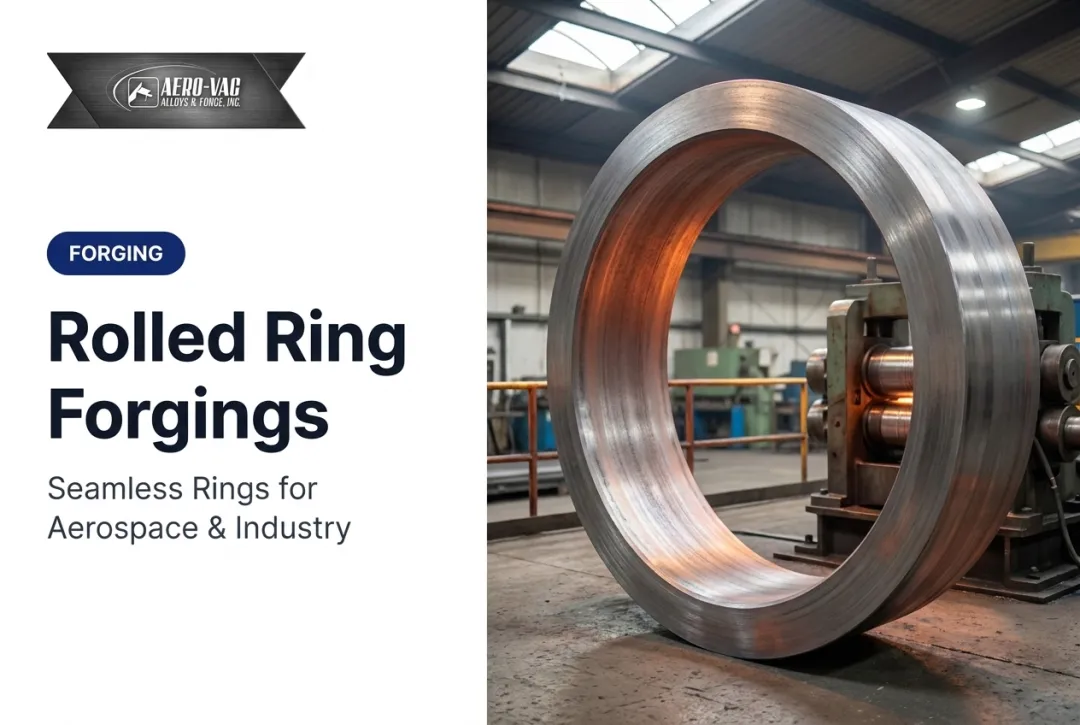
Grain structure: Forging reforms grain flow to follow the part's geometry. Rolled plate carries a linear grain pattern from the mill. When you machine that rolled plate into a final shape, you're cutting straight through the grain, which the Forging Industry Association (FIA) identifies as a fatigue and stress-corrosion risk.
Mechanical performance: A 2007 Acta Materialia study on Ti-6Al-4V examined forged bar against unidirectionally rolled and cross-rolled plate under high-cycle fatigue testing.
Forged and unidirectionally rolled samples showed macrozones roughly 50-70 micrometers wide; cross-rolled material showed narrower banding around 20 micrometers. Microstructure and grain orientation directly affect fatigue crack behavior, even without a single universal "forged beats rolled by X%" figure in the literature.
Cost and lead time: Rolled plate is cheaper and faster for large, simple flat structures. Forging costs more upfront due to tooling and process complexity.
The FIA notes forgings make more economical use of material over the part's life, since near-net-shape forgings generate less scrap than starting with flame-cut plate and machining it down.
Here's a quick decision guide:
| Scenario | Best Choice |
|---|---|
| Safety-critical, high-stress component | Forged plate |
| Large, flat structural application | Rolled plate |
| Simple, low-stress part | Machined bar or plate |

Benefits and Key Industry Applications
Forged plate earns its premium in applications where in-service failure is unacceptable.
Strength-to-weight advantages make it valuable across:
- Aerospace structural components and airframes
- Defense armor and structural systems
- Power generation equipment and pressure-boundary hardware
- Oil & gas pressure vessels and drilling equipment
- Heavy trucking gears and bearings
In power generation, open-die forged plate is commonly specified for reactor pressure vessels, boiling-water and small modular reactors, turbines, generators, compressors, and heat exchangers—components that demand uniform grain flow and proven structural integrity.
Material efficiency adds to the case. The FIA notes that forgings use stock more economically than flame-cutting plate and machining it down, because near-net-shape forgings generate comparatively little scrap.
Fewer secondary operations and lower in-service failure rates often mean forged plate costs less over a full service life—even when the upfront price is higher.

Sourcing High-Quality Forged Plate for Your Application
Not every supplier can guarantee consistent forged plate quality. That's the risk procurement teams take on when they chase the lowest quote.
Start with certification. ISO 9001 and AS9100 certification should be your baseline requirement for aerospace or defense-grade material. These standards establish a documented quality management system, not just a marketing claim.
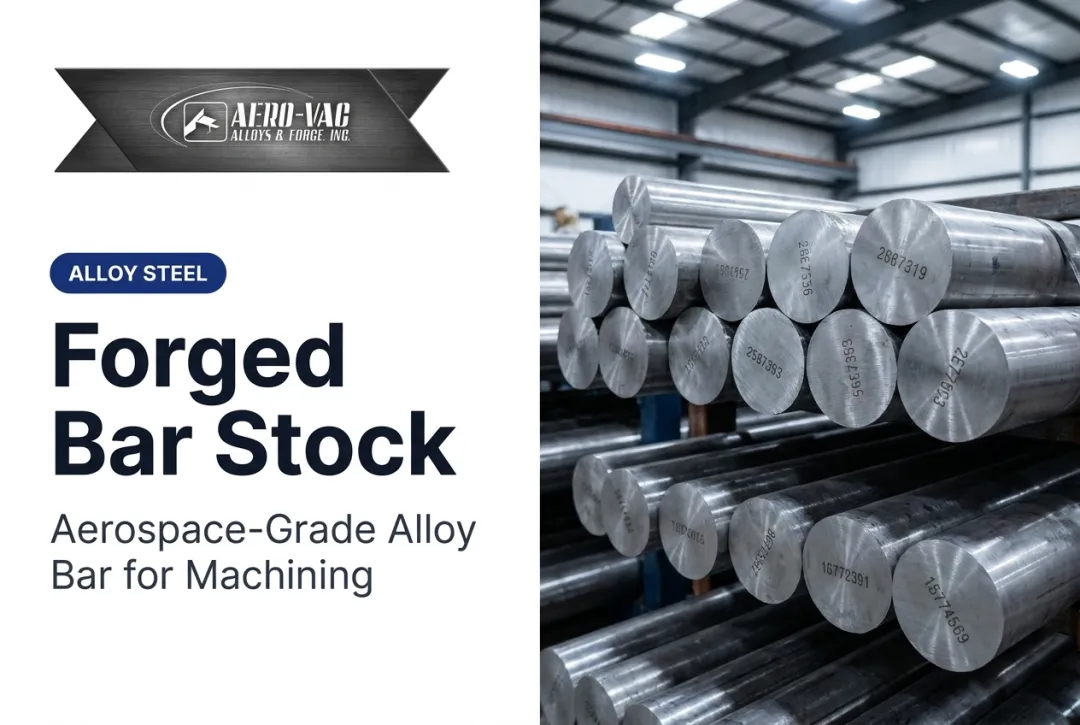
Aero-Vac Alloys & Forge is an ISO 9001 and AS9100-certified manufacturing distributor supplying forged plate and alloy steels to aerospace, defense, energy, and industrial customers. Its open-die forgings use high-cleanliness melt stock where grain structure and fatigue strength matter.
The team provides live technical support for custom cuts, odd sizes, and just-in-time delivery, whether you need a single custom-cut piece or a bulk order.
Before finalizing any order, confirm:
- Mill certifications and material traceability records
- Heat treatment documentation matching your specification
- NDT and inspection records (liquid penetrant, magnetic particle, or ultrasonic testing, depending on the application)
Skipping this step is how "forged plate" ends up as a rolled substitute somewhere down the supply chain.
Frequently Asked Questions
What is the hardest metal to forge?
Difficulty varies by alloy and process, but titanium alloys like Ti-6Al-4V, tungsten, and nickel-based superalloys like Waspaloy are widely considered among the hardest. They demand narrow temperature windows and generate high flow stress during deformation.
What's the difference between forged plate and rolled plate?
Forging reshapes the internal grain structure to align with the part's geometry, improving strength and fatigue resistance. Rolling only reduces thickness without reorienting the grain for directional strength.
Is forged plate more expensive than rolled plate?
Yes, upfront. Forging requires more tooling and processing steps than rolling. However, forged plate often reduces long-term costs through less material waste and fewer in-service failures.
What industries use forged plate most?
Aerospace, defense, oil & gas, power generation (including nuclear), and heavy machinery industries rely on forged plate for safety-critical, high-stress components where failure carries serious consequences.
Can forged plate be customized for odd sizes or small quantities?
Yes. Specialized distributors like Aero-Vac Alloys & Forge handle both small-quantity and large bulk orders, sourcing custom cuts and odd sizes through a direct RFQ process.
How do I verify the quality of forged plate before purchase?
Check for ISO 9001 and AS9100 certification, request mill test reports, and confirm heat treatment and NDT/inspection documentation before finalizing any order.