
Many engineers and buyers focus heavily on the forging operation itself, but the properties that matter most, strength, hardness, fatigue resistance, come from what happens after the part is shaped. Forgings without proper heat treatment struggle to meet the tolerances aerospace, defense, and energy applications demand.
This article covers the purpose of heat treatment, the four main types, how the process actually runs step by step, and how to choose a supplier that gets it right.
Key Takeaways
- Heat treatment refines grain structure and unlocks mechanical properties forging alone can't achieve
- Forging shapes metal; heat treatment alters its internal microstructure, two distinct but complementary steps
- Four primary heat treatment types exist: annealing, normalizing, quenching, and tempering
- Repeated or improperly sequenced heat treatments can degrade rather than improve properties
- Working with an ISO 9001/AS9100-certified metal distributor ensures traceable, mission-critical material quality
What Is the Purpose of Heat Treatment in Forging?
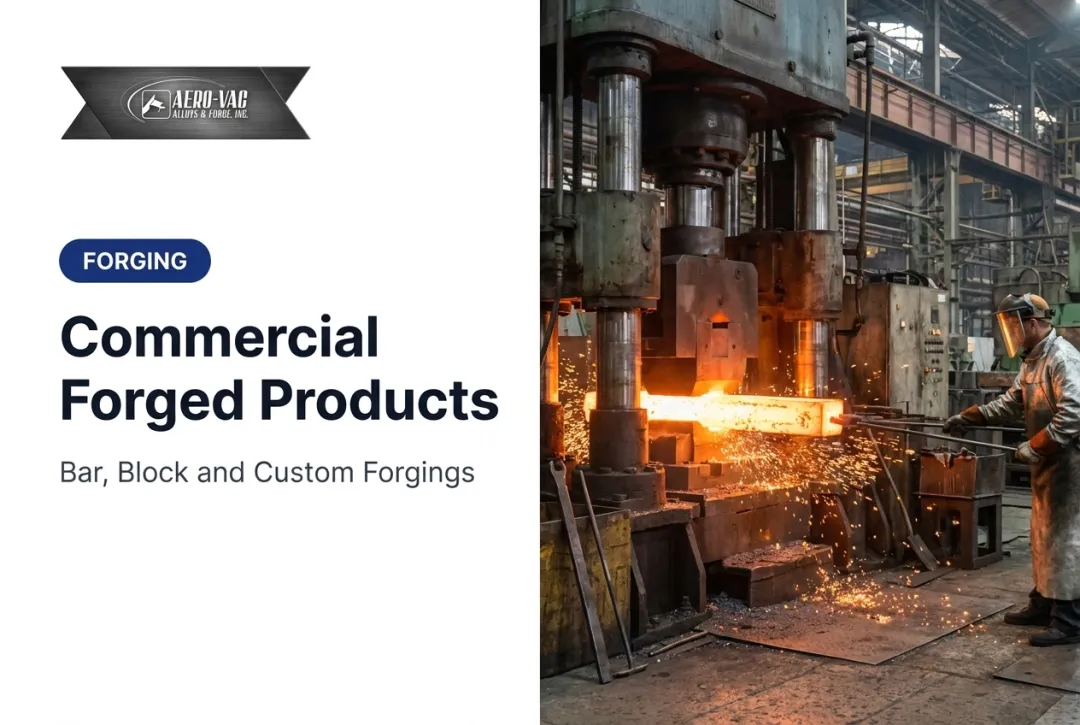
Forging deforms metal under enormous compressive force. That process closes internal voids and aligns grain flow, but it also creates residual stress and an uneven microstructure. Heat treatment is what corrects that.
The core objectives of post-forging heat treatment include:
- Relieving internal stresses locked in during deformation
- Refining grain structure for consistency across the part
- Enhancing hardness, strength, and ductility to meet engineering requirements
- Improving machinability before secondary operations
- Establishing the specific certified condition required by the customer's spec
Skip this step, or get it wrong, and you're left with forged parts carrying inconsistent properties and hidden residual stress. Those conditions drive premature failure, especially in rotating or load-bearing components.
Why the Numbers Matter More Than a Percentage
You'll sometimes see claims that heat treatment accounts for a fixed share of total forging cost or energy use. There's no reliable industry-wide figure for that. What's better documented is the standards structure governing the process. ASTM A668 assigns specific annealing, normalizing, and quenching sequences by forging class, and AMS2759/1J governs heat treatment for carbon and low-alloy steel aerospace parts. These specs, not a generic percentage, are what actually control cost and outcome on a real purchase order.
Industries like aerospace, defense, and oil and gas don't accept "heat treated." They require heat-treated forgings certified to a named specification, with documented furnace and test records tied to a specific heat lot. Aero-Vac Alloys & Forge supplies forged material with heat treatment and testing support aligned to those certification requirements.
Heat Treating vs. Forging: Understanding the Difference
These two operations get lumped together constantly, but they're mechanically unrelated.
Forging is a mechanical shaping process. Compressive force from a press or hammer deforms the metal into a new geometry, aligning grain flow and closing internal voids along the way.
Heat treatment is a thermal process. No shaping occurs. Instead, controlled heating, holding, and cooling cycles rearrange the metal's internal crystal structure to adjust hardness, strength, and toughness.
A side-by-side view makes the distinction clear:
| Aspect | Forging | Heat Treatment |
|---|---|---|
| Method | Mechanical (compressive force) | Thermal (heat cycles) |
| Effect | Shapes geometry, aligns grain flow | Alters microstructure and properties |
| Timing | Happens first | Follows forging (sometimes using residual heat) |
| Goal | Achieve shape and grain orientation | Achieve hardness, strength, ductility |

The two steps are sequential and complementary. Forging builds the shape. Heat treatment finalizes the properties that shape needs to perform.
The Four Types of Heat Treatment Explained
Nearly every forged alloy steel component passes through some combination of these four processes.
Annealing heats the metal to a soak temperature, holds it, then cools it slowly. This softens the material, relieves internal stress, and improves machinability. It's often used as prep work before further machining or additional heat treatment.
Normalizing heats the part above the transformation range, then air cools it. This refines grain structure and improves uniformity across the part, correcting inconsistencies left over from forging.
Quenching cools the metal rapidly in water, oil, or polymer and locks in a hardened microstructure such as martensite. This is the primary hardening step, but it's also the riskiest: uncontrolled thermal gradients can cause distortion or cracking.
Tempering reheats the quenched part to a lower temperature, then cools it again. This reduces brittleness while retaining most of the strength gained during quenching. Quench-and-temper (Q&T) is one of the most common combined routes in forged steel specs.
Case hardening (carburizing) is a specialized fifth technique: carbon diffuses into the surface layer while the part is held above the critical temperature, creating a hard exterior over a tougher core. It's common for gears and bearings that need surface wear resistance without sacrificing core toughness.

Step-by-Step: How Heat Treatment Works in the Forging Process
The sequence matters as much as the individual steps.
- Heating: The forged part is brought to a precise temperature range specific to its alloy grade. Get this wrong, even by a modest margin, and the resulting microstructure won't match spec.
- Holding/Soaking: The part stays at temperature long enough for uniform transformation through the entire cross-section, not just the surface.
- Cooling: Controlled cooling, whether quench, air, or furnace cool, determines the final microstructure. This is the step that actually sets hardness and strength.
- Tempering/Post-treatment: A secondary heating step balances hardness with toughness and reduces residual stress left from quenching.

The Residual-Heat Opportunity
A 2019 AIP Conference Proceedings study covers loading forged components straight into a continuous heat-treatment furnace while they still hold residual heat from forging. Researchers flagged potential gains in energy use, reduced handling, and shorter lead time.
Feasibility still hinges on part geometry and cooling behavior. Treat it as a qualification pathway worth exploring, not a guaranteed shortcut.
How Many Times Should You Heat Treat Steel?
There's no universal rule here, and that's the honest answer. Most forgings go through one full heat treatment cycle, commonly quench and temper. Some complex alloys, or parts requiring refined grain structure after prolonged austenitizing, use double hardening or double tempering as an intentional, specified route.
What over-treating can cause:
- Grain growth
- Decarburization
- Dimensional distortion
- Reduced impact resistance in certain temperature ranges
For example, 4340 steel tempered in the 220–260 ksi range risks losing impact resistance, and temper brittleness is a known concern between 482–842°F (250–450°C) for many alloy steels.
The correct cycle count depends on alloy chemistry, the required temper, and the certification standard that governs the part. If your spec doesn't explicitly authorize a second cycle, don't treat it as a safe improvisation.
Sourcing Properly Heat-Treated Forging Alloys
Getting the metallurgy right starts with getting the sourcing right. A supplier who doesn't understand heat treatment sequencing, or can't document it, is a liability on any aerospace, defense, or power generation program.
Aero-Vac Alloys & Forge is an ISO 9001 and AS9100-certified manufacturing distributor supplying forging steels and related alloys to customers across these sectors. Heat treatment is handled in-house and, when volume or turnaround requires it, through NADCAP-certified partners.
That model lets Aero-Vac deliver material in the exact metallurgical condition a specification calls for—whether Boeing BMS PS15000.5 hardening for high-tensile steel or AMS-2770 treatment for wrought aluminum forgings.
Evaluate a forging steel supplier on:
- Documented conformity to the exact spec revision, not just a general "heat treated" label
- In-house or NADCAP-partnered capability across annealing, normalizing, quenching, and tempering
- Just-in-time delivery for scheduled contract orders
- Technical staff who can answer specification questions directly
Aero-Vac supplies more than 150 aerospace-grade alloy specifications, including 4340 alloy steel, AMS 6414, and AMS 6512 maraging steel, to aerospace, defense, and power generation customers. Programs gain single-source control: raw material, forging, and heat treatment to spec—without three separate vendor handoffs.

Frequently Asked Questions
What is the purpose of heat treatment in the forging process?
Heat treatment relieves internal stress created during forging and refines grain structure to optimize strength, hardness, and ductility. Without it, forged parts often have inconsistent properties that lead to premature failure.
What is the difference between heat treating and forging?
Forging is mechanical shaping using compressive force to create a part's geometry. Heat treatment is a thermal process that alters the internal microstructure to set hardness, strength, and toughness.
What are the four types of heat treatment?
The four core types are annealing (softens and relieves stress), normalizing (refines grain structure), quenching (hardens via rapid cooling), and tempering (reduces brittleness after quenching).
How many times should you heat treat steel?
Most forgings undergo one complete cycle, typically quench and temper. Some alloys require double hardening or tempering, but this depends entirely on the governing specification, not a universal rule.
What industries rely most on heat-treated forgings?
Aerospace, defense, oil and gas, and power generation are the primary sectors requiring certified heat-treated forging steel, where documented mechanical properties under severe service conditions are mandatory.