
That's where forged bar stock comes in. It's a distinct category of metal, combining the strength benefits of forging with the practical, ready-to-machine form of bar stock.
This article covers what forged bar stock actually is, how it's made, how it differs from standard rolled bar and billet, the grades engineers request most, and how to source it without guesswork.
Key Takeaways
- Forged bar stock refines grain structure through compressive shaping, unlike rolled or extruded bar
- Grades like 4140, 4340, and 8620 dominate aerospace and defense procurement
- Forging reduces porosity risk versus casting, though no universal strength percentage applies
- Certifications (AS9100, mill test reports, ultrasonic testing) matter more than the word "forged" alone
- Sourcing success depends on traceability, exact specification matching, and a supplier who answers the phone
What Is Forged Bar Stock?
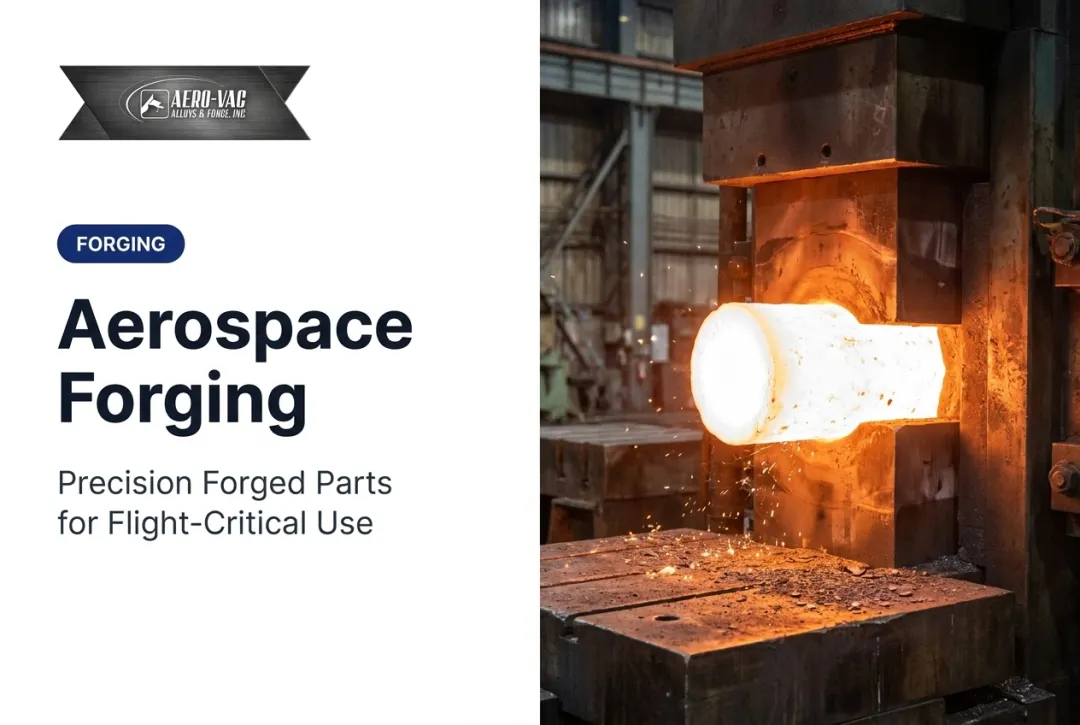
Forged bar stock starts as a metal billet that's hot-worked, or forged, into a bar shape before final machining. The forging process uses compressive force—pressing or pounding the metal—to shape the metal without melting it.
That's the key difference from standard "bar stock," which is typically produced by rolling or extrusion. No compressive forging step means no grain refinement.
Why forging changes the metal itself:
- Closes internal porosity left over from the casting or continuous-cast process
- Aligns grain flow in the direction that matters for strength
- Refines dendritic structures and reduces alloy segregation
The Forging Industry Association notes that this grain alignment supports better ductility, impact resistance, and fatigue resistance compared to material that hasn't been worked this way.
What "Forged Steel" Actually Means
At a metallurgical level, forged steel is a condition, not a grade. Alloys such as 4140, 4340, stainless, and nickel can all be forged. The forging step is what refines the internal structure before the bar ever reaches a machine shop.
Common Shapes and Sizes
Forged bar stock typically comes in:
- Round — the most common shape for shafts and fasteners
- Square — used in structural and tooling applications
- Hex — common in fastener stock
- Flat — used for brackets and structural components
Size ranges vary widely by supplier capability, from a few inches in diameter up to several feet. Final limits depend on the forge's press capacity and the customer's finished-part requirements.

How Forged Bar Stock Is Made
The process follows a predictable sequence, though the details (reduction ratio, heat treatment, testing) vary by specification.
- Billet selection — starting stock is chosen based on chemistry and cleanliness requirements
- Heating to forging temperature — the billet is preheated so it can be worked without melting
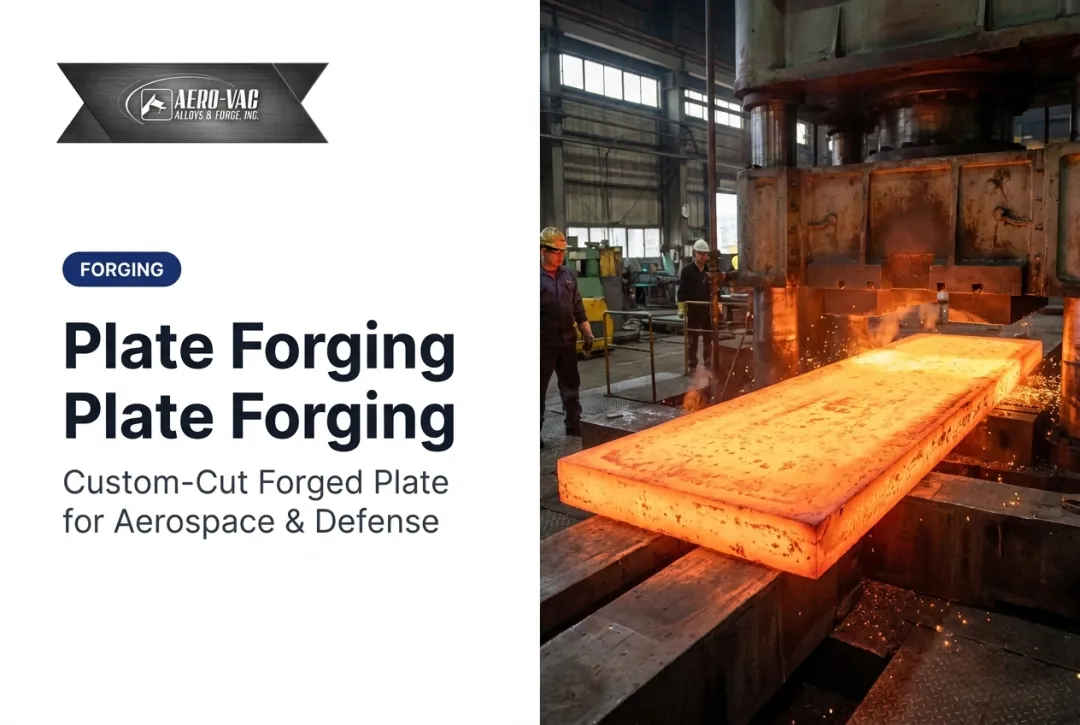
- Open-die or press forging — compressive force shapes the bar, progressively working it to size
- Controlled cooling and heat treatment — annealing, normalizing, or quench-and-temper, depending on the required condition
Each heat treatment serves a different purpose:
- Quench-and-temper forms martensite, then tempers it to reduce brittleness
- Annealing softens the material and relieves residual stress
- Normalizing refines grain structure for more uniform properties across the cross-section

Quality Controls That Matter
Certified suppliers don't just forge and ship. They document:
- Mill test certificates confirming chemistry and mechanical properties
- Ultrasonic testing per standards like ASTM A388, which covers pulse-echo inspection of heavy steel forgings
- Full traceability back to the original heat lot
At Aero-Vac Alloys & Forge, that means open-die forging from high-cleanliness melt stock, plus ultrasonic inspection to specs such as AMS-2631. Reputable distributors also verify ISO 9001 and AS9100 credentials before a lot is shelved. A certification on paper means little without the underlying test data.
Forged Bar Stock vs. Standard Bar Stock vs. Billet
These three terms get confused constantly. Here is the direct distinction.
| Term | What It Is | Key Characteristic |
|---|---|---|
| Billet | Unworked starting stock | Raw material, not a finished product |
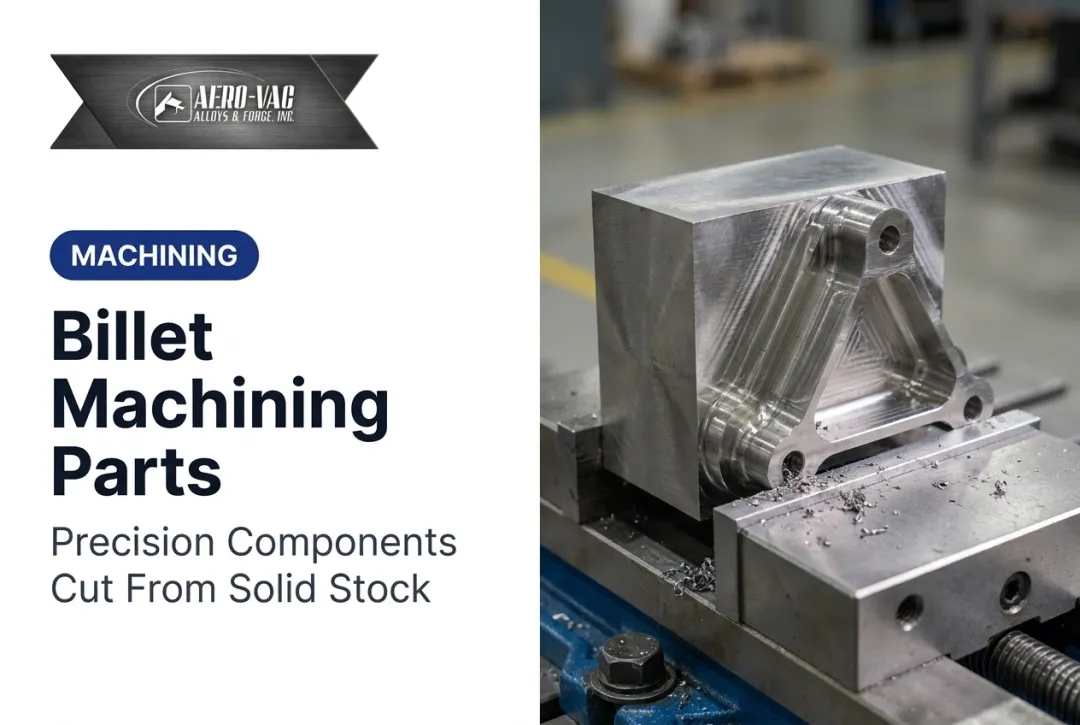
| Standard bar stock | Rolled or extruded to size | No compressive forging step |
| Forged bar stock | Compressively shaped and worked | Refined grain flow, closed porosity |
Is forging different from bar stock? Yes. Forging is a shaping process involving compressive force. Bar stock is a product form. You can have rolled bar stock or forged bar stock; the terms are not interchangeable.
Is forged steel stronger than cast steel? Generally, yes. A University of Toledo comparison reported forged parts achieving 26% higher tensile strength, 37% higher fatigue strength, and 44% higher yield strength than comparable cast parts. Forging refines defects and orients grain flow; cast steel keeps its as-cast structure and porosity risk.

Is billet stronger than forged material? No. Billet is the unworked raw material; forging is what happens to billet to improve strength through grain refinement. Billet is a starting point, not a competing product.
Cost and lead time: Specialty-metals demand has been mixed recently. Metal Center News reported in mid-2024 that some exotic and aerospace-grade alloys still carried lengthy lead times, even as general specialty-metal inventories were being trimmed. Pricing and availability vary by grade and section size—request a direct quote rather than relying on published benchmarks.
Common Grades and Specifications
Not every alloy gets forged for the same reason. Here's what shows up most often on aerospace and defense purchase orders.
4140: The Workhorse Grade
4140 is a chromium-molybdenum alloy steel known for toughness, wear resistance, and machinability. It's commonly specified under AMS 6349 for normalized bars.
Hardness can reach up to 50 Rc in thinner sections, though exact properties depend on section size and heat-treatment condition.
Other Frequently Ordered Grades
- 4340 — higher strength and toughness than 4140; common in landing gear and highly loaded structural parts (AMS 6415, AMS 6484)
- 8620 — case-hardening alloy for parts that need a hard surface and a tough core
- Stainless grades (17-4PH, 15-5PH, A286) — used where corrosion resistance matters alongside strength
- Nickel alloys (Waspaloy, Inconel 625) — used in high-temperature, high-stress environments

Specifications like AMS, ASTM, and mil-spec standards dictate the exact grade, condition, and testing requirements for critical parts. A drawing that just says "4140" without a spec revision leaves too much room for interpretation on a flight-critical component.
Industries That Rely on Forged Bar Stock
Forged bar stock shows up wherever failure isn't an option:
- Aerospace — structural components, landing gear, engine hardware
- Defense/DoD — armor systems, weapons platforms, vehicle components
- Nuclear and particle accelerators — components that must hold up under radiation and thermal stress
- Oil and gas — downhole tools and drilling equipment under high pressure and corrosion
- Power generation — turbine and generator components
- Heavy trucking — gears and drivetrain components under constant cyclic load
- Motorsports — high-performance components where weight and strength both matter
These industries share one thing: parts that can't afford unpredictable failure. Rolled bar stock might work fine for a low-stress bracket, but a landing gear component needs the grain flow and fatigue resistance that only forging provides.
Aero-Vac Alloys & Forge supplies grades used in these applications—including 4340, HP9-4-30, and A286. Boeing specification BMS7-182, for example, covers HP9-4-30 bar and forging stock for high-strength, fatigue-resistant aircraft structures.
How to Choose and Source the Right Forged Bar Stock
Picking a supplier isn't just about who has the lowest price sheet. A few factors separate a smooth order from a costly delay.
Evaluate these before you commit:
- Grade certification — does the mill test certificate match the specification on your drawing?
- Size tolerances — can the supplier meet your exact dimensional requirements, or will you pay for extra machining?
- Lead time — is the material in stock, or does it need to be forged to order?
- Quantity flexibility — can they handle a prototype run and a production order without switching processes?
Why a Live Person Still Matters
Automated ordering platforms work fine for standard sizes. They fall apart the moment you need a custom cut, an odd length, or a just-in-time delivery around a production schedule.
Aero-Vac Alloys & Forge built its model around this gap. As an AS9100- and ISO 9001-certified manufacturing distributor, it sources exact specifications quickly, handles both small quantities and large orders, and backs that with an in-house saw-cutting department and global export experience.
When a customer needs a nonstandard size, a live representative works the problem rather than routing the request through a form that assumes standard catalog dimensions. For flight-critical hardware, you need that mix of certification and someone who picks up the phone when the specs go off-catalog.
Frequently Asked Questions
What does forged steel mean?
Forged steel is metal shaped by compressive force rather than casting or simple rolling. This process refines grain structure and closes internal porosity, improving strength and fatigue resistance.
What is the difference between forging and bar stock?
Forging is a compressive shaping process that refines grain flow. Bar stock is a product form, typically produced by rolling or extrusion, that doesn't include this compressive working step unless specifically forged.
Is forged steel stronger than cast steel?
Generally, yes. Forging reduces porosity and aligns grain flow to the part's shape, while cast steel retains an as-cast structure that carries a higher risk of internal voids and inconsistent strength.
Is a billet stronger than forged material?
No. Billet is unworked raw material, not a finished product. Forging is the process that improves a billet's strength through grain refinement, so the comparison isn't really apples to apples.
What is 4140 round stock?
4140 is a chromium-molybdenum alloy steel valued for its toughness, wear resistance, and machinability. It's one of the most frequently requested grades for forged bar applications, often specified under AMS 6349.
What industries use forged bar stock?
Aerospace, defense, oil and gas, power generation, and heavy trucking rely on forged bar stock most heavily. These industries need parts that hold up under high stress, fatigue, or extreme temperatures without unpredictable failure.