
Here's the part that gets overlooked: complex machining success depends as much on the raw material going into the spindle as it does on the machine itself. A five-axis center can't compensate for inconsistent hardness or an untraceable heat lot.
This guide covers what complex CNC machining actually means, the failure points that derail these projects, why material selection matters more than most shops admit, and how to pick a partner who won't leave you exposed on either front.
Key Takeaways
- Complex CNC work covers multi-axis, mill-turn, and multi-op parts with tight GD&T
- Most failures trace to tolerance stack-up, tool deflection, or inconsistent material
- Certified, traceable stock cuts scrap and rework before the first chip is cut
- ISO 9001/AS9100 suppliers reduce compliance risk on aerospace, defense, and nuclear jobs
What Is Complex CNC Machining?
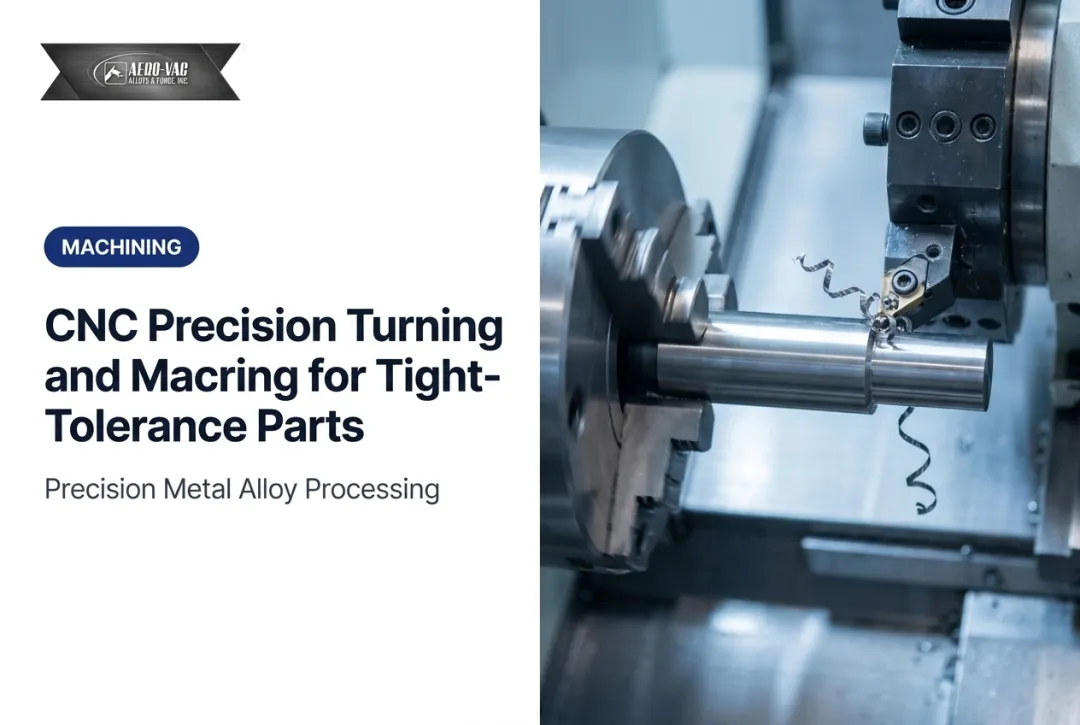
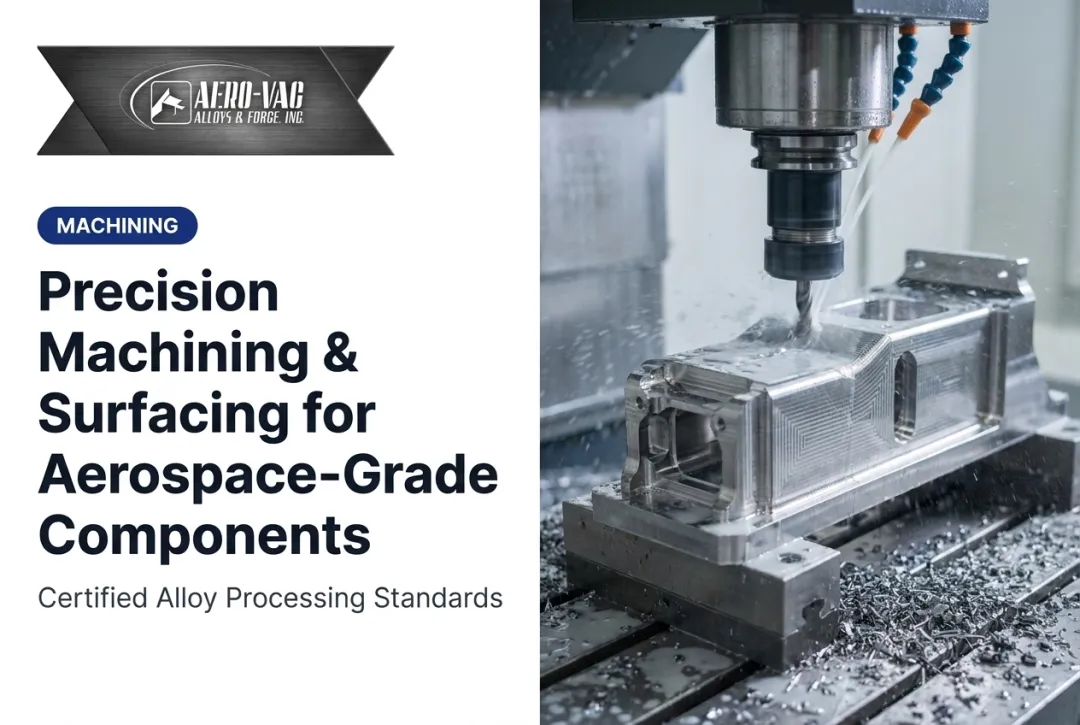
Complex CNC machining goes beyond standard 3-axis milling or turning. It covers 4-axis and 5-axis operations, mill-turn workflows, and multi-setup processes built for parts that simple toolpaths can't reach.
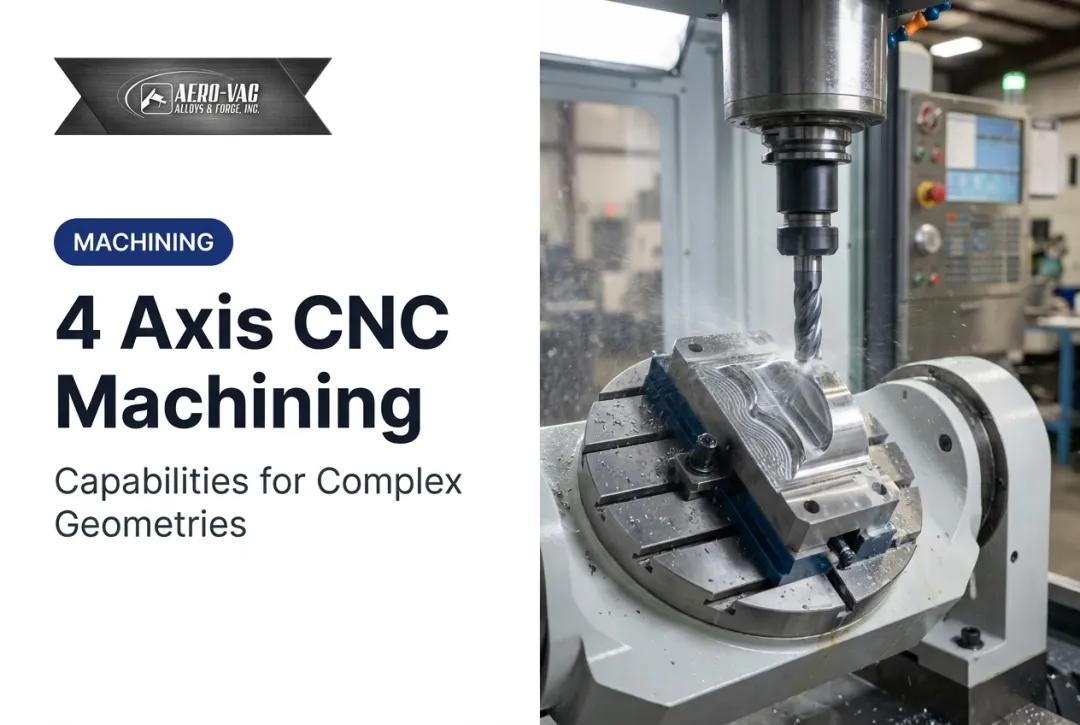
What sets complex work apart is how many coordinated motions the job needs—and whether the tool can keep access and orientation through the full cut. A 3-axis machine moves in X, Y, and Z. Simultaneous 5-axis motion adds coordinated rotary movement, so the tool can follow complex 3D contours without repositioning the part.
Okuma describes this as X, Y, Z plus A and B rotary axes, with fewer setups, faster cycles, and less scrap as potential (not automatic) benefits.
Standard vs. complex machining differs in three ways:
- Setups — complex parts often need fewer physical setups but far more programming per setup
- Tooling — deep pockets and thin walls demand specialized holders, shorter overhangs, and tighter speed control
- Programming — postprocessor accuracy and simultaneous-axis coordination replace simple linear toolpaths
Common complex features include:
- Undercuts and internal cavities
- Deep, narrow pockets
- Thin walls prone to deflection
- Compound curves requiring simultaneous axis motion
- Tight GD&T callouts across multiple datums

Industries requiring this level of work include aerospace, defense, medical devices, power generation, and motorsports. Each shares one trait: near-zero tolerance for failure.
Core Challenges in Machining Complex Parts
Complex geometry multiplies risk at every stage. Here's where projects actually go wrong.
Tolerance Stack-Up
Small deviations across multiple setups and operations compound into a much larger overall error. Best-practice guidance recommends worst-case tolerance analysis before the part ever hits the machine, not after scrap starts piling up.
Workholding and Fixturing
Delicate or geometrically odd parts don't hold still the way a simple block does. Thin walls flex under clamping force. Complex fixtures introduce their own datum errors if they're not designed alongside the part.
Tool Deflection, Chatter, and Heat
Difficult alloys make everything worse:
- Titanium traps heat in the cutting zone due to poor thermal conductivity, accelerating tool wear
- Inconel and nickel alloys work-harden and build up on the cutting edge
- Hardened steels shift machinability with every change in heat-treat condition
Chatter—self-exciting vibration, per Seco Tools—can damage tools, spindles, and finished surfaces before an operator even notices.

Material Inconsistency
Even a solid toolpath fails when the stock is wrong. Impurities, hardness variation, and missing certification derail well-planned programs before cutting strategy is the real issue. A program built for one hardness range fails silently on stock that's slightly off-spec.
Inspection and Metrology
Catching error late is as costly as making it. CMM and in-process probing flag deviations early, before a whole batch is scrapped. Thermal expansion and tool wear make sustained accuracy hard to hold without in-machine checks on high-accuracy features.
Why Material Selection Is Critical to Machining Success
Here's the part that doesn't get enough attention: starting with certified, consistent-grade alloy steel reduces scrap, tool wear, and rework before the machining program even runs. Inconsistent grain structure or hardness variation in the raw stock shows up as tolerance drift in the finished part, every time.
Aero-Vac Alloys & Forge, an ISO 9001- and AS9100-certified manufacturing distributor, supplies alloy steel stock with the traceability regulated programs require. That includes grades such as AMS 6382 4140 and AMS 6409 4340, both documented for precision-machining suitability.
Traceability matters for a concrete reason: current federal quality-assurance rules require material identification traceable by heat, part, or serial number through fabrication and use. For DoD, aerospace, and nuclear programs, that's not optional paperwork. It's a procurement control.
What machine shops actually need from a materials partner:
- Odd sizes and custom cuts without mill lead times
- Prototype runs and production contracts handled with the same flexibility
- Consistent grain structure and hardness across the lot, so machining variability doesn't stack on geometric variability
- A live person to talk through specs, not a static catalog
Aero-Vac runs an in-house saw-cutting department for its own inventory and customer-supplied material, and partners with NADCAP-certified heat treaters when volume or turnaround requires outside processing. In-house speed plus qualified outside capacity keeps just-in-time machining programs on schedule.

Industries That Depend on Complex CNC Machined Parts
High-stakes industries depend on complex CNC machined parts when failure is not an option:
- Aerospace and defense: Structural aircraft components and rocketry parts, where a single dimensional miss can ground a program
- Energy and power generation: Nuclear reactors, oil and gas, and turbines that allow near-zero failure tolerance
- Medical devices: Implants and surgical instruments that need dimensional accuracy and sterilization-compatible finishes
- Motorsport: Racing components that need durability without excess weight
- Heavy trucking: Parts built to survive years of load cycling
Aero-Vac's customer base in this space includes Boeing, SpaceX, Gulfstream, Lockheed, and Northrop.
In energy work, GE's turbine-blade repair combined hybrid additive deposition with five-axis milling and full turning in a single handling. Field measurements showed improved sealing efficiency over years of service.
Choosing the Right Partner for Complex CNC Machining Projects
A successful complex machining project needs two things working together: a capable machine shop and a reliable, certified material supplier. One cannot cover for gaps in the other.
In the machine shop, look for:
- Proven multi-axis CNC capacity and tight-tolerance process control
- Documented inspection (CMM, in-process checks) matched to your print
- Experience with your alloy family and related heat-treat or stress-relief steps
- Clear capacity planning so complex parts do not sit behind simpler jobs
In the material partner, look for:
- ISO 9001 and AS9100 certification with full material traceability
- Fast RFQ turnaround instead of multi-week quote cycles
- Real-time order tracking for delivery-driven and JIT programs
- Global shipping plus multilingual support for international OEM supply chains

Material quality and timing still decide whether a good shop can hold spec. Wrong alloy condition, missing certs, or a late mill shipment will idle spindles as fast as a programming error.
Aero-Vac Alloys & Forge supports that side of the partnership with ISO 9001 and AS9100 credentials, a Rapid Response RFQ process that puts you in touch with a metals expert quickly, and real-time order tracking across worldwide distribution. The company ships internationally and works with customers in English and Español.
For shops and OEMs running just-in-time complex machining, certified stock, fast turnaround, and a live materials expert on the line are what keep tight-tolerance jobs on schedule.
Frequently Asked Questions
How much does CNC machining cost per hour?
Rates vary by machine type, part complexity, and region, with no universal figure that applies across the board. Complex multi-axis work typically costs more than standard 3-axis milling due to programming, setup, and inspection demands.
What does CNC machining mean?
CNC machining is computer-controlled subtractive manufacturing: programmed toolpaths guide a cutting tool to remove material and produce a precise part geometry.
What is the most precise CNC machine?
Five-axis machining centers and precision mill-turn platforms generally achieve the tightest tolerances because they reduce the number of setups and datum transfers. No single tolerance figure applies universally, since accuracy depends on the specific machine, material, and inspection method.
What are the different types of precision machining?
Core methods include CNC milling, CNC turning, EDM, grinding, and multi-axis machining. Each suits different geometries, materials, and tolerance requirements.
What is a complex CNC part?
A complex CNC part requires multiple operations, additional axes, or specialized tooling rather than a single straightforward setup. Compound curves, deep pockets, and tight GD&T callouts typically drive that complexity.