
That's where forging comes in. The demand signal is only getting louder. Defense buildup, allied restocking, and modernization programs are pushing procurement teams to find capacity fast. A 2024 industry survey reported by Defense News found that roughly 60% of surveyed forging companies sell to defense, yet those companies operate at only about 52% capacity. There's room to scale, if the right suppliers step up.
This article covers what military forging actually is, the types used across defense programs, where these parts end up, the materials specified, and how to pick a supplier who won't leave your program waiting.
Key Takeaways
- Forging aligns metal grain structure, delivering superior strength and fatigue resistance versus casting or machining
- Defense programs depend on forgings for naval, ground combat, aerospace, and weapons systems
- ISO 9001 and AS9100 certified distributors deliver the traceability defense programs require
- U.S. forging capacity is available now to support DoD production needs
What Is Forging in the Military?
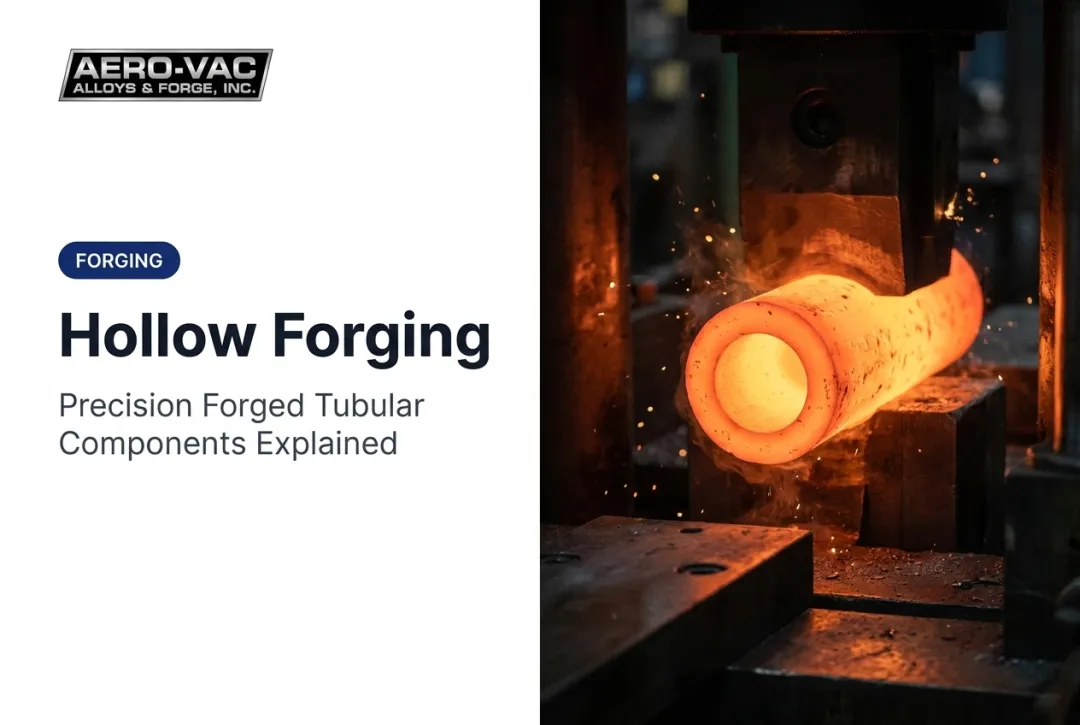
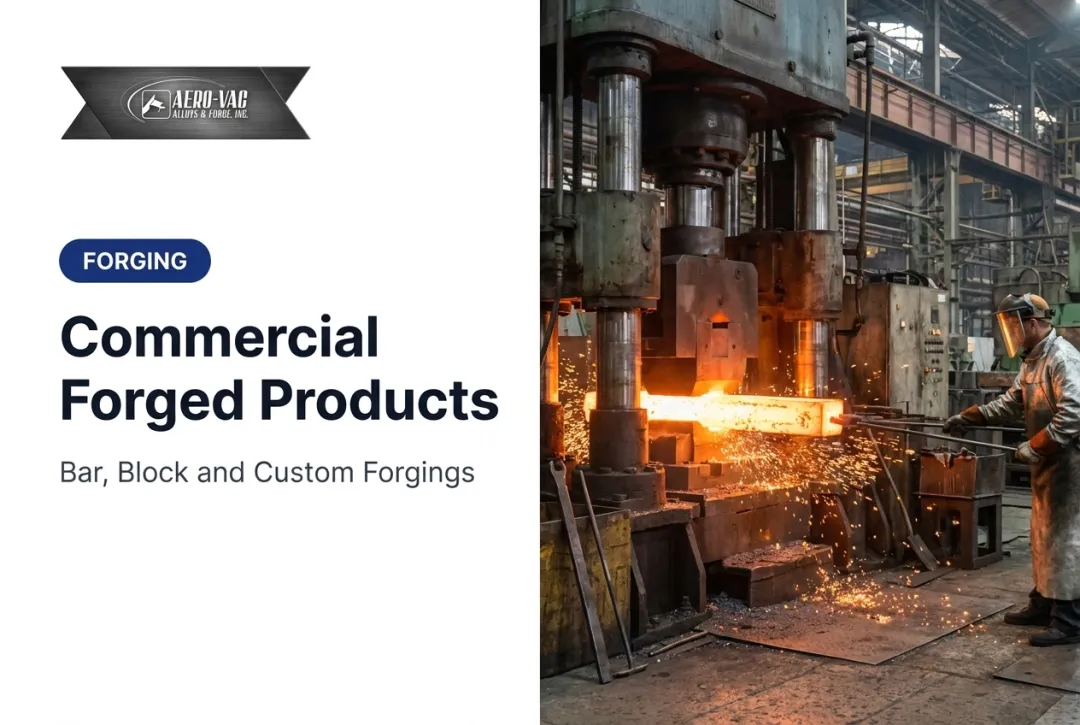
Forging shapes heated metal billets using compressive force, typically hammers or hydraulic presses driving material into engineered dies. That differs from casting, where molten metal is poured into a mold and allowed to solidify.
Is forging the same as blacksmithing? No. Blacksmithing is manual, artisanal shaping without dies, more art than an engineering specification. Forging, by contrast, is industrial-scale and die-based, built to deliver repeatable mechanical properties across thousands of identical parts. Both use compressive force, but only one produces the consistency a fighter jet bracket demands.
Why Grain Flow Matters for Safety-Critical Parts
When metal is forged, its internal grain structure aligns in the direction of the compressive force. That alignment increases strength precisely where the load will be applied in service. This is why forged parts get specified for landing-gear struts, gears, and structural fittings where failure isn't an option.
The Pentagon has taken notice. A December 2024 National Defense Magazine report says the Innovation Capability and Modernization Office has proposed investing $2 billion over five years to modernize domestic casting and forging capacity. That proposal shows how central forging is to U.S. defense supply chains.
Defense-capable forgers aren't general commercial shops. They typically carry:
- AS9100 certification — quality management built specifically for aviation, space, and defense supply chains
- ISO 9001 certification — the baseline quality system standard
- Mil-spec compliance — standards like MIL-S-83311, which governs custom forged parts for aerospace and defense
Forging traces back thousands of years, yet it still underpins weapons platforms flying, sailing, and rolling today.
Types of Forging Used in Defense Manufacturing
Not every forged part is made the same way. The Forging Industry Association's Product Design Guide outlines three primary processes used across defense manufacturing.
Open-Die Forging
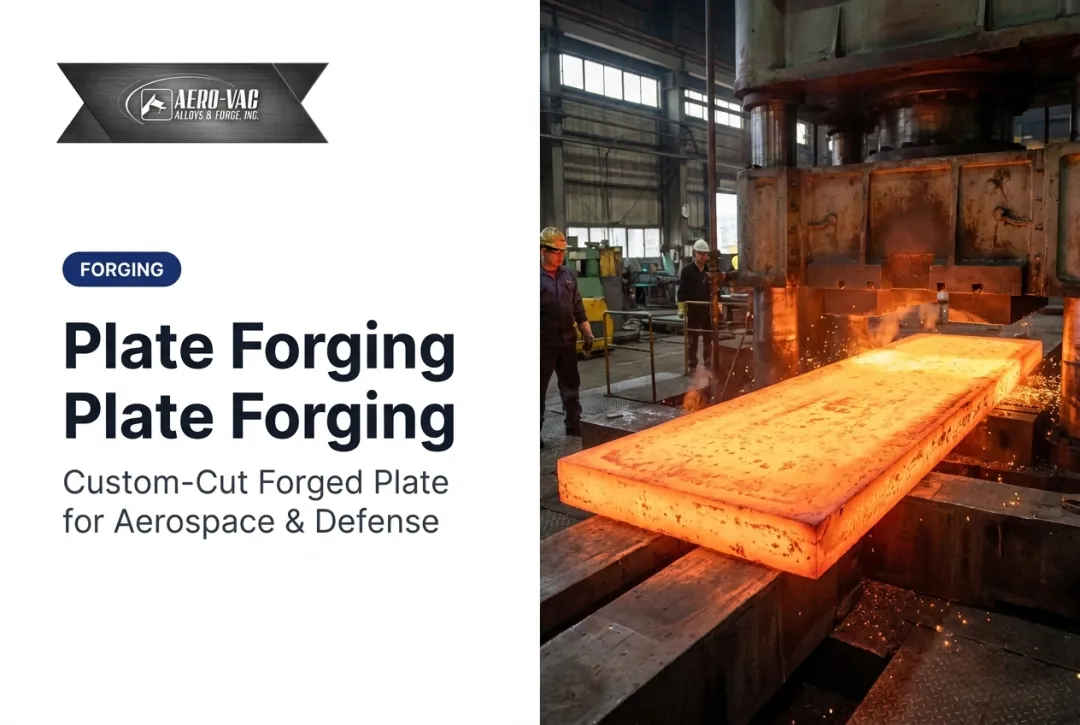
Open-die forging suits large, custom shapes such as shafts, disks, and heavy-section components. Open-die forging uses flat or shaped dies without fully enclosing the workpiece, giving engineers flexibility in size. FIA notes this process can handle parts ranging from a few pounds up to over 300 tons.
Closed-Die (Impression-Die) Forging
This process presses metal into a fully enclosed die cavity, producing high-volume, near-net-shape parts with tighter dimensional control. It is a strong fit for gears, valves, and fittings, where consistency across thousands of units matters more than raw size.
Rolled Ring Forging
Starting with a pierced disk preform, this process produces seamless circular geometry ideal for turbine casings, bearing races, and flanges. FIA notes it typically produces no flash and requires minimal finish machining.

OEMs increasingly convert legacy cast parts to forged equivalents to boost strength and cut weight without redesigning the whole component. Once forged, most parts still need heat treatment and finishing work to hit their final mechanical property targets.
Where Military Forgings Are Used
Forged components are used across nearly every branch and platform type.
- Naval systems: Shafts, gears, valves, and pump components engineered for corrosion resistance in saltwater environments
- Ground combat vehicles: Track components, suspension parts, axles, and steering systems built for impact and fatigue resistance
- Aerospace and rocketry: Aircraft and rocket components forged near-net-shape to cut weight and machining time without sacrificing strength
- Weapons systems: Firearms, artillery, and missile components requiring high tensile strength plus heat and corrosion resistance
- Nuclear and power generation: Reactor and turbine generator forgings used in DoE and defense-adjacent applications
- Support equipment: Cranes, loaders, and logistical gear built for harsher-than-civilian operating conditions
One high-profile case: Alcoa partnered with the U.S. Army to co-develop a single-piece forged aluminum hull for combat vehicles, produced on a 50,000-ton press specifically to improve blast resistance against IEDs.

Materials Commonly Specified for Defense-Grade Forgings
Material selection depends entirely on the application, but several alloy families dominate defense-grade forging specs:
- Alloy steels — high-strength grades like 4340 and 300M for structural components
- Stainless steels — 300-series, 400-series, and 17-4PH for corrosion resistance
- Titanium — Ti-6Al-4V grades under MIL-T-9046 and MIL-T-9047 for weight-critical aerospace parts
- Nickel-based superalloys — grades like Inconel 625, 690, and X-750 for high-temperature environments
- Specialty grades — HY-80 and HY-100 high-tensile steel under MIL-S-16216, used in naval shipbuilding and submarine construction

Material traceability isn't optional on defense contracts. DoD and DoE compliance requires mill test reports and documented chain of custody, proving exactly where a piece of metal came from before it becomes a mission-critical part.
Aero-Vac Alloys & Forge maintains an ISO 9001:2008 and AS9100 certified inventory covering these alloy families, supporting fast procurement for defense, aerospace, and nuclear customers without long mill lead times.
The State of the U.S. Forging Industry and Defense Capacity
Demand for forged defense components is rising, yet the U.S. forging industry is still running below its potential.
That 2024 Wipfli survey commissioned by FIA found forging companies averaging just 52% capacity utilization, with underutilization even more pronounced among companies primarily doing defense work. The capacity is there—it simply is not being fully used.
Why the gap? A few structural issues:
- Short contract cycles make it hard for forgers to invest in equipment upgrades with confidence
- Approved vendor list friction slows qualification of new suppliers, even capable ones
- Inconsistent demand signals leave companies unsure whether to expand
Programs such as the Defense Production Act Title III and Industrial Base Analysis and Sustainment (IBAS) aim to close that gap. They fund modernization of forging equipment and technology through research, prototype, and production proposals.
How to Choose a Forging Supplier for Military and Defense Programs
Picking the wrong supplier can cost a program months. Here's what actually matters:
Certifications First
Look for suppliers holding both AS9100 and ISO 9001 certifications. Those credentials signal quality systems built for aerospace and defense tolerances, covering traceability, inspection protocols, and nonconformance control.
Flexibility on Order Size
Programs need suppliers who handle both large production runs and custom, odd-size quantities. A supplier who only fields automated quote systems won't cut it when you need a live technical contact who understands the spec sheet.
Delivery Reliability and Export Experience
Ask about order tracking systems and on-time delivery history, especially if your supply chain touches multinational or allied partners. Real-time visibility into order status matters more when a delay could stall a production line.
Aero-Vac Alloys & Forge works with metal buyers who need these same capabilities. Its client base includes Boeing, Lockheed, General Dynamics, and Northrop.
The company supports that work with an ISO 9001 and AS9100 certified quality system and a live team ready to quote custom specifications.
Frequently Asked Questions
What is forging in the military?
Forging is a manufacturing process that uses compressive force to shape metal into strong, durable components for weapons systems, vehicles, ships, and aircraft. It's specified wherever failure isn't an acceptable outcome.
What are the different types of forging?
The three main types are open-die (large, custom shapes), closed-die/impression-die (high-volume, precise near-net-shape parts), and rolled ring forging (seamless circular components like turbine casings and flanges).
Is forging the same as blacksmithing?
No. Forging is an industrial, die-based process engineered for repeatable mechanical properties. Blacksmithing is manual and artisanal. Both use compressive force, but they differ dramatically in scale and precision.
Why is forging preferred over casting for defense parts?
Forging aligns the metal's grain structure, which increases strength and fatigue resistance in the direction of applied loads. Casting doesn't offer this benefit and can introduce porosity that weakens critical parts.
What certifications should a defense forging supplier have?
ISO 9001 and AS9100 are the key indicators. They confirm a supplier's quality system can meet the tolerances and documentation defense and aerospace contracts require.
How long does it take to source forged materials for defense projects?
Lead times vary based on alloy and specification requirements. Working with a distributor that holds ready inventory and offers just-in-time delivery can shorten procurement timelines compared to relying solely on mill orders.