
Get the coupon wrong and the consequences aren't small. Mismatched heat lots, incorrect geometry, or missing traceability documentation can trigger failed audits, scrapped material, or costly rework on programs where schedules are already tight.
This guide breaks down what tensile test coupons are, the standards that govern them (primarily ASTM E8/E8M), how they're machined, and what to look for in a supplier when the application is flight-critical.
Key Takeaways
- Tensile test coupons verify yield strength, tensile strength, and ductility before material reaches production.
- ASTM E8/E8M governs metallic tension testing; ASTM A370 covers steel-specific procedures.
- Coupons must share the same heat/lot as parent material for certified, traceable results.
- Sourcing from an ISO 9001 and AS9100 certified distributor protects aerospace and defense traceability requirements.
What Is a Tensile Test Coupon?
A tensile test coupon is a specimen machined to standardized dimensions, taken from or representative of a parent material batch, and used to measure how that material responds to a pulling force. ASTM E8/E8M is explicit that these specimens don't always fully represent the entire part or lot — they're a controlled sample, not a guarantee.
Most coupons use a "dog-bone" profile: wider grip ends with a narrower gauge section in the middle. This shape forces the failure to occur in a predictable, measurable zone rather than at the clamps, which keeps the stress calculation clean.

A coupon pull test reveals:
- Yield strength — the stress at which the material starts to deform permanently
- Ultimate tensile strength (UTS) — the maximum stress before failure
- Elongation — how much the material stretches before breaking
- Modulus of elasticity — stiffness, derived from the stress-strain curve
Why the Coupon Must Match the Parent Lot
A coupon is only as good as its traceability. If it isn't machined from the same heat or lot as the production material, the test results are meaningless for certification purposes. This is why mill test reports (MTRs) always tie back to a specific heat number.
Witness Coupons vs. Standard Mill Coupons
- Witness coupons travel through the same heat treatment or welding cycle as the actual production parts, capturing any process-induced changes
- Standard mill-certified coupons come from the base material lot before any secondary processing
Which type a program requires depends entirely on the governing purchase order and material specification.
Standards Governing Tensile Test Coupons
Not all "tensile standards" cover the same thing, and mixing them up on a purchase order causes real problems.
| Standard | What It Actually Covers |
|---|---|
| ASTM E8/E8M | Room-temperature tension testing of metals; specimen geometry, gauge length, procedure |
| ASTM A370 | Mechanical testing of steel bar, plate, and forged products; complements E8 |
| ISO 6892-1 | International equivalent for global suppliers and export compliance |
| AMS-STD-2154 / AMS-H-6875 | Not tensile-specific — AMS-STD-2154 covers ultrasonic inspection; AMS-H-6875 governs steel heat treatment |
That last row matters. It's a common mistake to cite AMS-H-6875 as a tensile spec when it's actually a heat-treatment standard. If your material callout includes AMS references, verify what each one actually governs before assuming it dictates coupon geometry.
For round specimens, gauge length is one of the biggest practical differences between methods: 4D for E8, 5D for E8M. That detail changes how the elongation percentage is calculated.
Every certified coupon test report should reference:
- The exact standard used (E8/E8M edition, A370, or ISO 6892-1)
- Heat/lot number tying back to the parent material
- Specimen orientation and extraction location
- Actual measured values, not just pass/fail
How Tensile Test Coupons Are Prepared and Machined
Coupon prep starts with cutting a sample from bar, plate, or forged stock, then machining it down to the standardized dog-bone profile.
Typical prep sequence:
- Cut the blank from bar, plate, or forged stock
- Rough-machine and turn to near-net dog-bone geometry
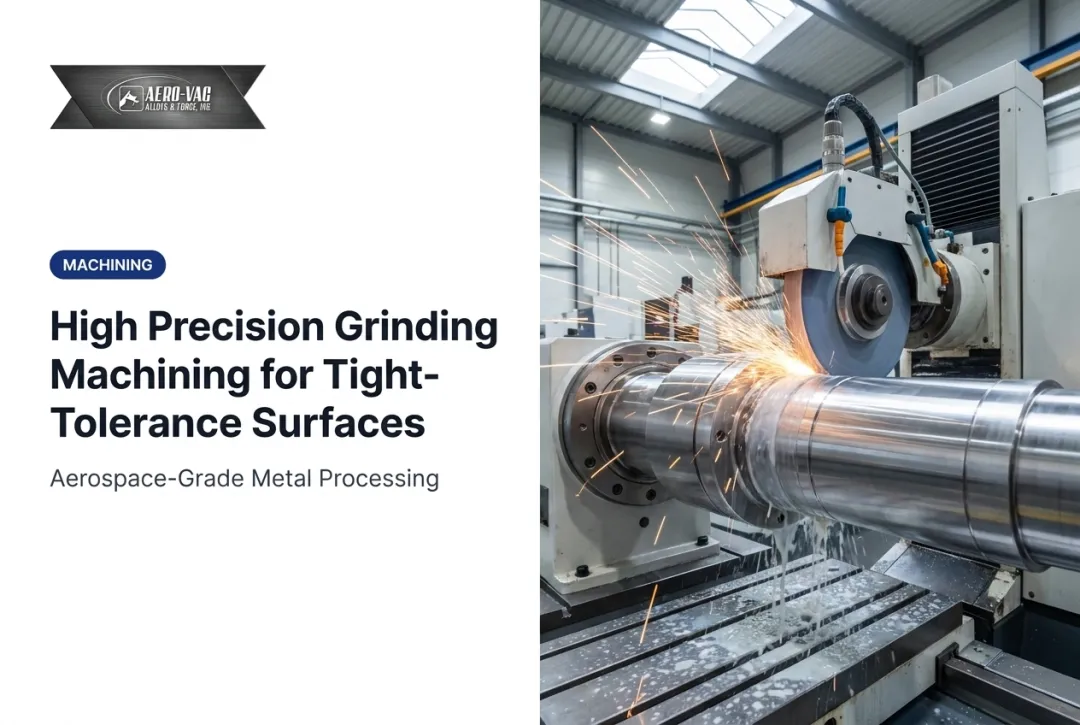
- Finish grind the gauge section to the required surface condition
- Verify gauge length, cross-section, and orientation before test
Three things determine whether the result is valid:
- Gauge length and cross-section tolerances: small deviations skew stress calculations, since stress is force divided by area
- Orientation relative to grain flow: especially critical in forged alloy steels, where longitudinal and transverse properties can differ
- Surface finish: rough machining marks create stress concentrations that cause premature fracture and invalidate the test

Orientation (item 2) deserves extra attention on forgings. Grain flow follows the forging process, and pulling a coupon across the grain versus with it can produce different ductility numbers. The purchase order needs to specify which orientation the program requires, since the governing spec rarely leaves this open to interpretation.
A supplier that machines coupons in-house, rather than shipping raw stock for the customer to cut, saves a step in an already document-heavy process. Aero-Vac Alloys & Forge runs rough machining, turning, grinding, and saw cutting alongside its raw material inventory. That keeps coupon prep and material sourcing under one roof instead of split across vendors.
Industries and Applications Relying on Certified Tensile Coupons
In most industries that require it, tensile coupon data is the gate that decides whether a lot ships at all.
- Aerospace and defense primes: Boeing, Lockheed, and General Dynamics require coupon-verified mechanical properties for every alloy lot in flight-critical hardware. Northrop Grumman supplier docs call for lot-tied test results before shipment.
- Oil & gas, power generation, and nuclear: Forging steels for reactor and turbine components must meet ASME mechanical thresholds.
- Motorsports and heavy trucking: Gear and bearing steels face extreme cyclic loads; tensile data confirms the material can handle them before it reaches a transmission or drivetrain.
Aero-Vac Alloys & Forge supplies several of these sectors directly. Alloy steels such as 4340, 300M, and 9310V go into aerospace, defense, and heavy equipment programs where mechanical property verification is required.
Choosing the Right Supplier for Tensile Test Coupons
The supplier matters as much as the standard. Coupon data is only useful if it's traceable, and traceability starts with who's certifying the material.
What to look for:
- ISO 9001 and AS9100 certification for aerospace and DoD-grade traceability documentation
- In-house machining and testing that reduces vendor handoffs and shortens turnaround
- A live technical contact for custom coupon sizes, odd cuts, or non-catalog quantities
- Order tracking and just-in-time delivery that keeps certification testing on schedule
Aero-Vac Alloys & Forge operates as an ISO 9001 and AS9100 certified manufacturing distributor, with a live metals expert available for custom cuts and both small-batch and large-volume orders. When a missed test deadline can stall an entire production run, a supplier who answers the phone with a straight answer helps keep certification—and the program—on schedule.

Frequently Asked Questions
What is a testing coupon?
A testing coupon is a machined specimen representative of a material batch, used to verify mechanical properties like tensile strength before that material goes into production.
What is the standard for tensile testing?
ASTM E8/E8M is the primary U.S. standard for metals, with ASTM A370 covering steel-specific procedures. ISO 6892-1 serves as the international equivalent for export compliance.
How much does a tensile test cost?
Costs vary based on material type, lab requirements, specimen quantity, and certification needs. Request a quote with your specific material and specification details for an accurate figure.
Why must a coupon match the parent material lot?
Certified mill test reports must trace back to a specific heat or lot number. Without that match, the results cannot support audit or certification requirements for the actual production material.
Can tensile test coupons be custom sized?
Yes. Suppliers with in-house machining and technical expertise can produce custom coupon dimensions for unique testing needs, orientations, or non-standard specifications.