
Non-destructive testing specialists inspect metal components for flaws without cutting, breaking, or altering them. Aerospace, defense, and energy companies depend on this work to keep aircraft flying and reactors running safely. The global NDT market reflects that dependence: it's valued at $18.80 billion in 2025 and projected to reach $42.30 billion by 2034, according to Fortune Business Insights.
This article covers the six core NDT methods, what specialists actually do day-to-day, which industries rely on them most, typical cost drivers, and why the material being tested matters just as much as the test itself.
Key Takeaways
- Six core NDT methods (UT, RT, MPI, PT, ECT, VT) cover most industrial inspection needs
- ASNT SNT-TC-1A guides industry certification; NAS410 sets the bar in aerospace
- Budget for higher costs as part complexity, method, and cert level increase
- Certified, traceable raw materials reduce downstream NDT rejections and rework
What Is Non-Destructive Testing and Why Does It Matter?
NDT examines a material or component's integrity without impairing its future usefulness. A part gets tested, passes, and goes straight into service. That's the entire point.
Manufacturers use NDT for two main reasons:
- Quality control — catching flaws before a part ships
- Safety compliance — verifying in-service components haven't developed cracks, corrosion, or fatigue damage
According to ASNT, six methods account for nearly all NDT performed across industries. Inspection programs commonly combine several methods because no single one catches every flaw type.
NDT results are only as good as the material underneath them. A flawed alloy with inconsistent chemistry or improper heat treatment can pass a superficial inspection and still fail in service. That's why the conversation about NDT can't stop at the inspection method. It has to start with where the metal came from.
What Does an NDT Specialist Do?
NDT specialists inspect welds, castings, forgings, and structural components for hidden defects. Their daily work involves setting up equipment, running the chosen test method, interpreting results, and documenting findings for quality assurance teams.
Certification Levels
Most specialists work under one of two frameworks:
- ASNT SNT-TC-1A: a recommended practice (not a formal standard) where employers write their own qualification program for training and certification
- NAS410: the aerospace-specific standard for personnel qualification, updated to Revision 6 in December 2025 with a new Level III eligibility pathway, per AIA
Within these frameworks, three levels apply:
- Level I: works under supervision, performs specific tests per written procedures
- Level II: works independently, interprets results, and produces final reports
- Level III: writes procedures, audits documentation, trains teams, and manages certification programs
Career Path and Documentation
Most specialists start as trainees, log supervised hours, move to Level II independence, and eventually pursue Level III. They document every finding in formats that feed ISO 9001 and AS9100 quality systems. Aerospace and defense manufacturers need those traceable inspection records to pass audits.
Aerospace, energy, and heavy manufacturing companies are actively hiring for these roles, driven in part by the certification pipeline changes above.
Common NDT Methods Explained
Each method catches different flaw types. These six core methods cover the bulk of production and in-service inspection work:
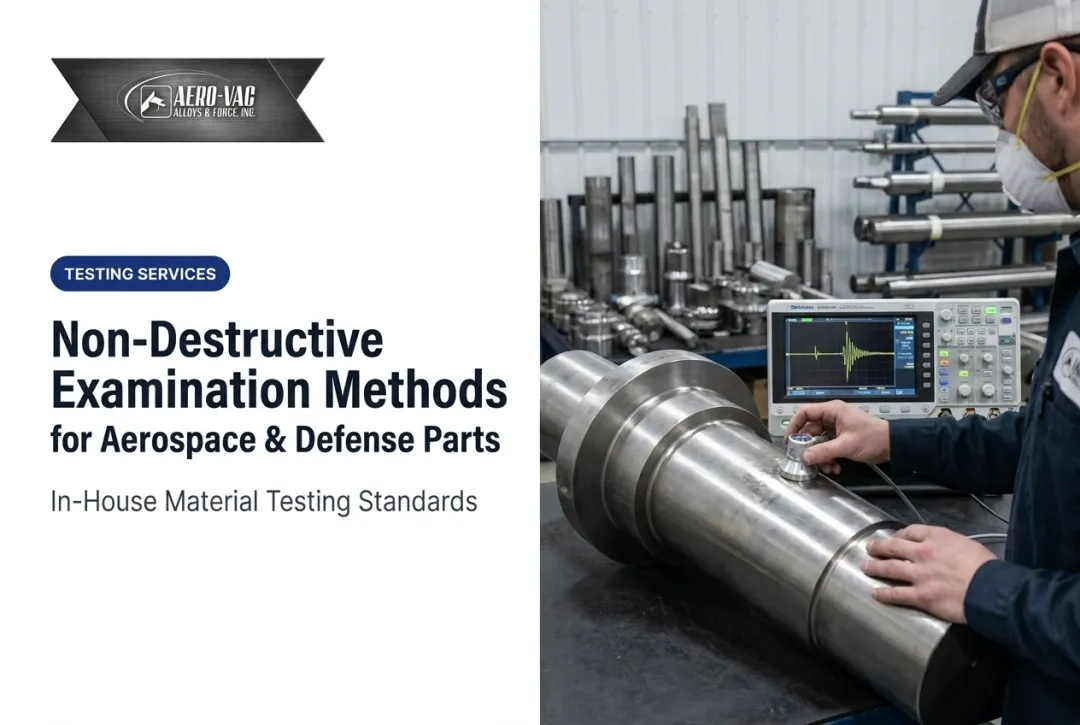
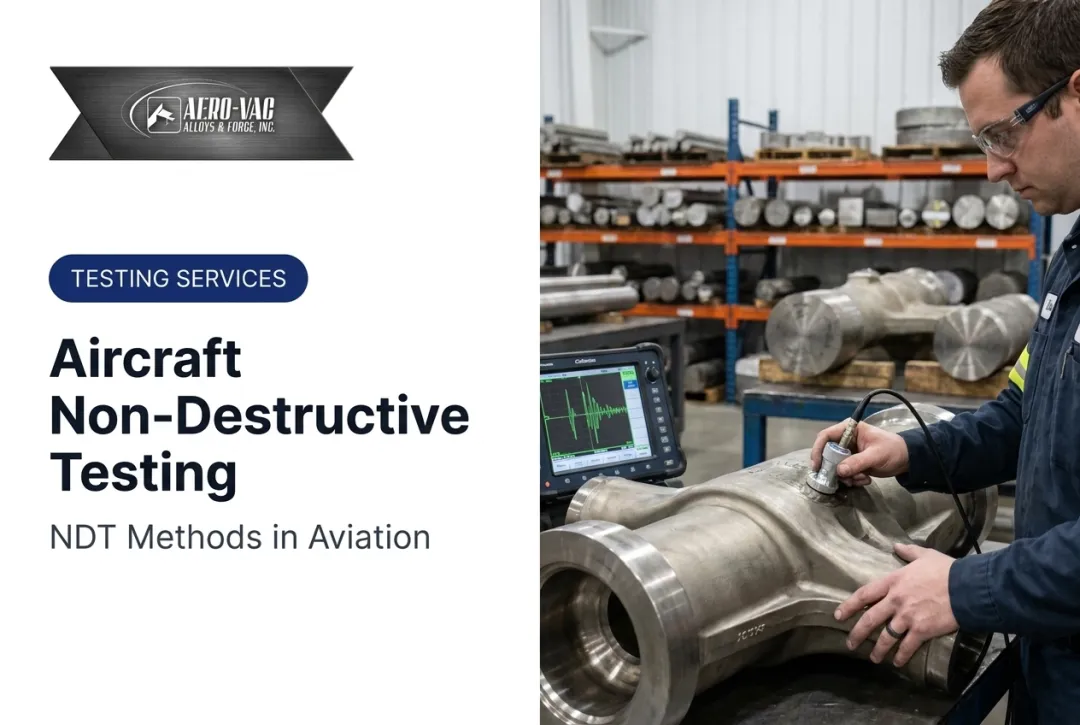
- Ultrasonic Testing (UT): Sends high-frequency sound waves through a part and reads the echoes to detect internal flaws and measure wall thickness. Common on forgings, plates, and pipe.
- Radiographic Testing (RT): Uses X-rays or gamma rays to image internal defects like voids and fabrication errors. Standard on welds, engines, and pressure tanks.
- Magnetic Particle Inspection (MPI): Magnetizes ferromagnetic material and applies particles that gather at surface or near-surface cracks. Widely used on landing gear and pipeline welds.
- Liquid Penetrant Testing (PT): Applies a penetrant that seeps into surface-breaking cracks, then a developer that pulls it back out for visibility. Works well on turbine blades and nonmagnetic stainless steel.
- Eddy Current Testing (ECT): Induces electrical currents into conductive materials and reads the response for flaws. Heavily used in aerospace tubing and fasteners.
- Visual Inspection (VT): Uses direct observation with the naked eye or optical aids to evaluate surface condition on welds, castings, and machined parts.

Aerospace programs frequently combine several of these. A single forging might see UT for internal soundness and MPI for surface cracking before it's cleared for use.
Industries That Rely on NDT Specialists
NDT isn't optional in industries where a missed defect can mean equipment failure, downtime, or worse.
Aerospace and Defense
Aircraft structures, engine components, and rocketry hardware depend on NDT at nearly every production stage.
Common applications include:
- Eddy current testing on airframes, engines, fluid piping, and landing gear (ASNT)
- Inspection of critical welds and fastener holes before assembly
- Ongoing checks on high-cycle fatigue parts throughout service life
Oil, Gas, and Power Generation
Pipeline welds, storage tanks, and reactor components undergo regular NDT to catch damage before it becomes a leak or outage.
Teams typically inspect for:
- Corrosion and wall thinning in pipelines and storage tanks
- Stress-related cracking in welds and pressure boundaries
- In-service degradation on reactor and power-generation components
Heavy Equipment, Motorsports, and Bearings
Gears, bearings, and drivetrain parts in heavy trucking and motorsports take repeated stress cycles. NDT catches fatigue cracking before parts fail in service.
Priority checks cover:
- Fatigue cracks in gears and bearing races
- Drivetrain components under high cyclic loads
- High-stress motorsports and heavy-equipment hardware

Those inspections only work when the material itself arrives ready for them. Aero-Vac Alloys & Forge, Inc. supplies certified alloy steels, nickel alloys, and titanium to companies in these sectors, including Boeing, SpaceX, GE, and Caterpillar.
That stock includes NDT-ready grades such as BMS-7-182 Type IV HP9-4-20 alloy steel forgings for landing gear and AMS 5707 Waspaloy—materials built for inspection from the moment they hit the dock.
How Much Does Non-Destructive Testing Cost?
There's no universal price sheet for NDT. Costs depend on the method, the part's size and complexity, and how fast you need results.
General cost drivers, ranked from least to most expensive:
- Visual inspection (VT) — lowest cost, minimal equipment
- Liquid penetrant testing (PT) — low equipment cost but labor-intensive
- Magnetic particle inspection (MPI) — moderate, requires specialized equipment
- Eddy current testing (ECT) — moderate to higher, sensor-dependent
- Ultrasonic testing (UT) — higher, requires trained operators and calibrated equipment
- Radiographic testing (RT) — typically the highest, due to safety protocols and imaging equipment

According to IBISWorld, project complexity drives pricing directly. Intricate parts need more specialized techniques and higher operator expertise, which raises labor costs. Aerospace components often command premium pricing—precision and safety rules leave little room for shortcuts.
Hidden Cost Factors
Beyond the base inspection fee, watch for:
- Certification level — Level III inspections cost more than Level I
- Equipment calibration — ongoing calibration and maintenance overhead
- Documentation and reporting — audit-ready records and traceability packages
Sourcing certified, traceable material upfront lowers NDT rejection rates and cuts rework costs before they start.
Why Material Quality Is the Foundation of Successful NDT
An NDT result is only as reliable as the material being tested. Inconsistent chemistry, undocumented heat treatment, or an unverified supply chain can all produce a part that passes inspection today and fails in service tomorrow.
This is where certified suppliers earn their keep. ISO 9001 and AS9100 certified distributors supply the documentation that streamlines both NDT and the audit process behind it:
- Mill certifications tied to the original heat
- Chemistry reports that confirm alloy composition
- Heat treatment records that verify process history IAQG guidance calls for traceability back to the original manufacturer and validation of test-report data, particularly for materials flagged as higher risk.

Aero-Vac Alloys & Forge is an AS9100 and ISO 9001 certified alloy steel distributor built for that requirement. Its just-in-time model delivers the exact specified alloy—not a substitute—with independent third-party testing before material ships.
Catalog examples for aerospace and defense buyers who need NDT-ready stock from day one include:
- HP9-4-30 / HP6-22 M430 certified to NDT 7114/3 ultrasonic inspection and Boeing Material Specifications
- Stock aligned to AMS 2301 magnetic-particle inspection requirements
- Material suitable for MIL-STD-2154 ultrasonic inspection programs
Frequently Asked Questions
What does an NDT specialist do?
NDT specialists inspect materials and components using methods like ultrasonic testing, radiography, and magnetic particle inspection to detect flaws without damaging the part. They document findings for quality assurance and compliance records.
How much does non-destructive testing cost?
Costs vary by method and part complexity. Simple visual or penetrant inspections cost less than radiography or ultrasonic testing, which require specialized equipment and higher operator certification.
What certifications should an NDT specialist hold?
Most specialists are certified under ASNT SNT-TC-1A or, in aerospace specifically, NAS410. Both frameworks define Level I, II, and III qualifications based on training and experience.
Which NDT method is most commonly used in aerospace?
Ultrasonic testing and eddy current testing are the most common in aerospace, used heavily on airframes, engines, fasteners, and landing gear components.
Can NDT detect all types of material defects?
No single method catches every flaw type. Inspectors often combine methods, such as ultrasonic testing with magnetic particle inspection, to cover both internal and surface-level defects.
How does material sourcing affect NDT outcomes?
Certified, traceable materials with documented chemistry and heat treatment records reduce inspection failures and rework. Unverified or substitute materials increase the risk of rejection during NDT.