
But here's a common pain point: buyers and engineers often mix up drop hammer forging with press forging or casting. That confusion leads to costly alloy mismatches and process delays. Choosing the wrong approach can mean scrapped parts, blown budgets, or worse, a failed component in the field.
This guide breaks down what drop hammer forging actually is, which materials perform best, and why sourcing certified forging billet matters more than most buyers realize.
Key Takeaways
- Drop hammer forging forms preheated billets with gravity-driven ram blows in closed dies for near-net shapes
- Forged grain flow delivers higher strength and fatigue resistance than cast or machined parts
- Alloy choice (plain-carbon, low-alloy, or specialty steel) drives forgeability and final part performance
- Aerospace, defense, and heavy trucking depend on drop-forged parts for critical load-bearing service
- Certified, traceable billet sourcing is non-negotiable for high-stakes industries
What Is Drop Hammer Forging?
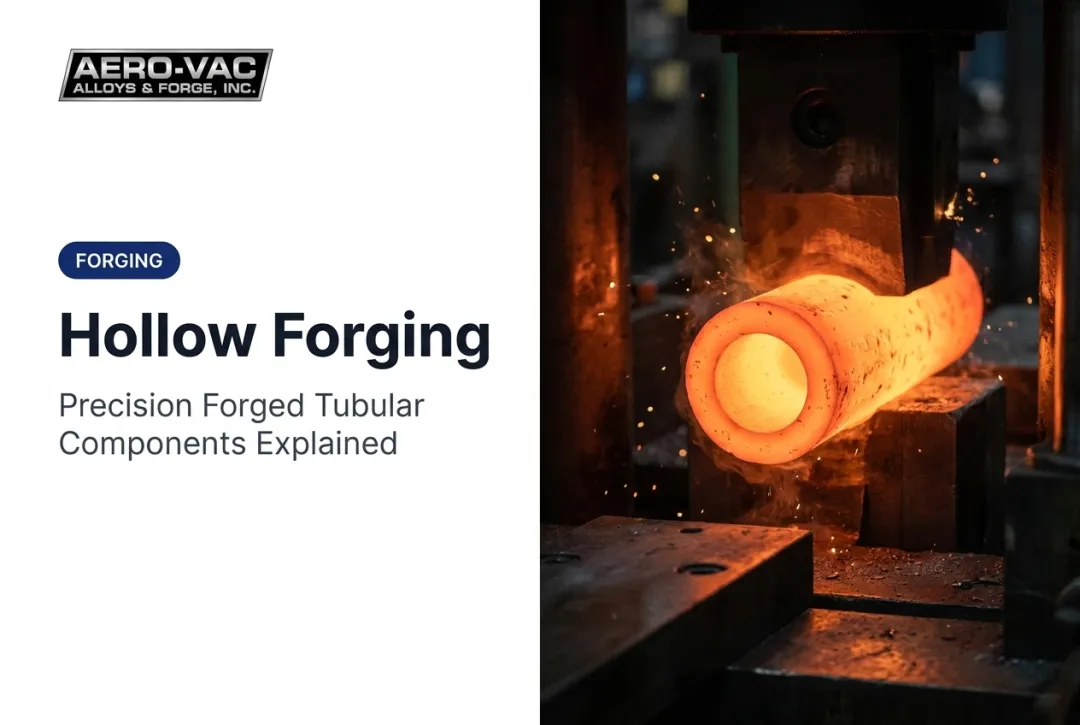
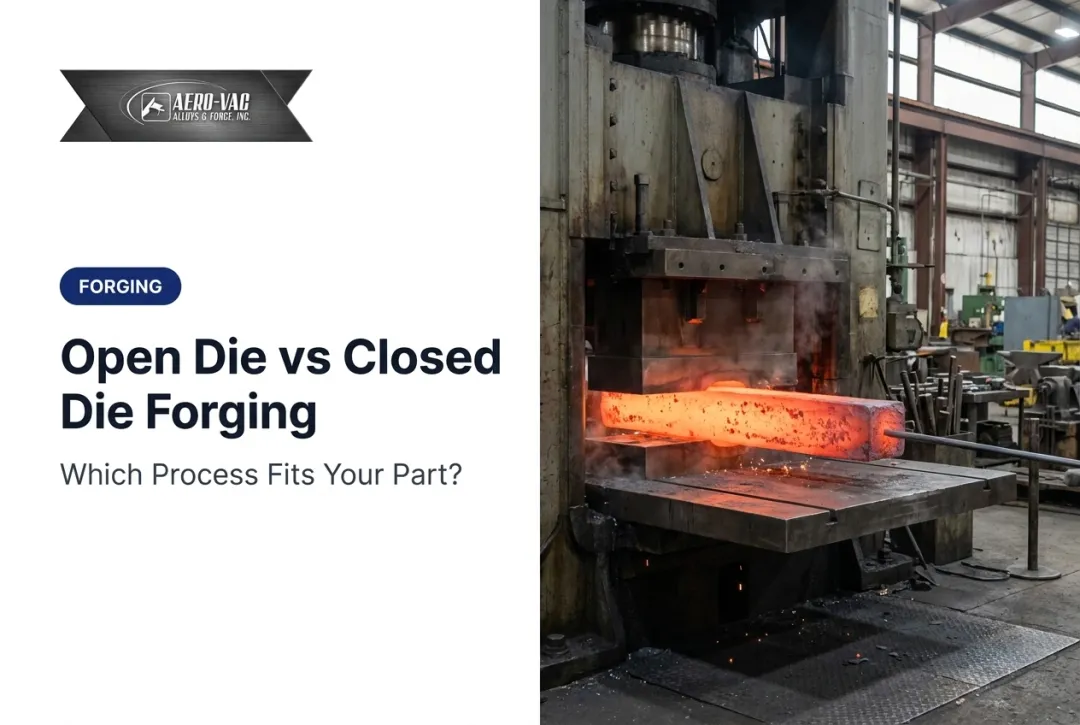
Drop hammer forging is a closed-die process. One die half sits fixed on an anvil; the other attaches to a moving ram above it. Operators place a heated billet on the lower die, then the ram drops until the metal fully fills the die cavity.
The typical sequence looks like this:
- Heat the billet to its forging temperature range
- Place it on the lower (stationary) die
- Drop the ram, striking the billet with controlled force
- Repeat blows until the die cavity fills completely
- Trim the excess flash material

Blow count and drop height shift with part size, geometry, and alloy. That is where metallurgical judgment separates a good forge shop from a mediocre one.
How It Differs From Press Forging
Drop hammers rely on high-speed impact, delivering peak load in roughly 2-5 milliseconds. Press forging, by contrast, applies slower, controlled force over 30-100 milliseconds, according to a 2017 manufacturer comparison from Anyang Forging Hammer. That speed difference changes how the metal flows and how skilled an operator needs to be.
The process traces back to hand forging. Modern drop hammers replaced the blacksmith's arm with gravity, precision dies, and controlled billet heating. Even the earliest steam-powered hammers, patented by James Nasmyth in 1842, built on the same principle: impact shapes metal better than static pressure alone.
Materials Used in Drop Hammer Forging
Not every steel forges the same way, and picking the wrong grade shows up fast, either during the forge or, worse, in service.
Plain-carbon and low-alloy steels dominate drop hammer applications because they balance strength, cost, and forgeability well. Higher-alloy grades like 4140 and 4340 step in when parts need to survive aerospace or defense-grade stress.
Forging Temperature Windows Matter
Every alloy has a safe forging range, and going outside it causes real problems:
| Grade | Typical Forging Range |
|---|---|
| AISI 1045 (medium-carbon) | 1,562°F – 2,282°F |
| AISI 4140 (low-alloy) | 1,560°F – 2,190°F |
| AISI 4340 (low-alloy) | 1,800°F – 2,250°F max |
Push a billet above its safe ceiling and you risk hot shortness or incipient melting at the grain boundaries, according to Carpenter Technology's guidance on difficult alloys. That's not a cosmetic defect. It's a structural one that can hide until the part fails under load.

That risk rises with alloy content. Aerospace and defense grades need tighter thermal control throughout the entire heating cycle, not just at the moment of the strike.
Why Billet Quality Determines Part Quality
Clean, well-specified billet reduces forging defects and improves grain-flow orientation in the finished part. Getting that stock—correct grade, certs, and size—without mill-level lead times is what keeps forge shops on schedule.
Aero-Vac Alloys & Forge, an AS9100 and ISO 9001-certified manufacturing distributor, supplies forging-grade alloy steel stock such as 4130, 4140, 4340, and 9310. For shops running just-in-time schedules, that turnaround matters as much as the certification paperwork.
Why Manufacturers Choose Drop Hammer Forging
Drop hammer forging shapes the part and reworks the metal's internal structure in the same blow. The impact refines grain flow, closes internal voids, and improves fatigue and impact toughness in ways casting cannot match. A real-world comparison: International Crankshaft's published benchmark data shows forged steel crankshafts achieved 26% higher tensile strength and 37% higher fatigue strength than cast iron equivalents. Fatigue life ran roughly six times longer, and cast iron parts reached only about 66% of forged steel's yield strength. Those figures are not universal across every part and alloy, but they show why forging wins in high-stress applications. Efficiency and lifecycle gains:

- Flash material gets recycled back into steelmaking, minimizing waste
- Production cycles run fast once tooling exists
- Stronger grain structure supports longer service life in the field That combination is why aerospace, defense, oil and gas, and heavy trucking industries specify drop-forged components for safety-critical parts. The Forging Industry Association reports the US forging industry generates more than $15 billion in annual sales, with major concentration in exactly these sectors.
Common Applications and Components
Drop-forged parts show up wherever strength and reliability can't be compromised.
Typical drop-forged components include:
- Wrenches and hand tools
- Crankshafts and connecting rods
- Gears and pinions
- Levers and structural fittings
- Aerospace fittings and landing-gear components
For Aero-Vac's customer base, that often means landing-gear structural parts, bearing components, and defense hardware requiring full alloy traceability. Custom components in the 25 to 100 lb range typically require 100% material test report (MTR) traceability, a standard that's non-negotiable in military procurement.

Part complexity and production volume ultimately decide whether drop hammer, press, or hydraulic forging is the right fit. High-volume, simpler geometries often favor presses. Complex parts needing deep internal grain refinement often favor hammers.
Drop Hammer Forging vs. Other Forging Methods
Among other forging methods, press forging is the closest comparison. Drop hammer forging and press forging both shape heated metal in closed dies, but they apply force differently.
Key differences:
- Deformation speed: Hammers deliver impact in milliseconds; presses apply slower, sustained force
- Operator skill: Hammer operators judge blow count and intensity in real time; presses are more automated and repeatable
- Safety requirements: OSHA's 1910.218 standard requires scale guards on hammers to contain flying debris during impact
- Versatility: Hammers often handle a wider range of part geometries without new tooling
Drop hammers break up large internal inclusions more effectively under impact. Presses tend to suit open-die and general shaping work. Results still depend on die design, reduction ratio, and workpiece size.
Modern programmable hammers now let operators fine-tune energy and timing electronically, narrowing the automation gap that once separated hammers from presses.
Frequently Asked Questions
What is the drop hammer forging process?
A heated billet is placed on a stationary lower die and struck repeatedly by a ram-mounted upper die until the metal fills the cavity. Excess flash is trimmed off afterward.
Why do blacksmiths put borax on hot metal?
Borax acts as a flux, removing oxide scale from the metal's surface during heating. This lets clean metal surfaces bond properly during forge welding.
Is drop hammer forging expensive compared to other methods?
Tooling costs run higher upfront than casting or machining. But marginal cost per part drops significantly over long production runs, and flash material gets recycled, cutting waste.
What metals work best for drop hammer forging?
Plain-carbon and low-alloy steels are most common due to their strength-to-cost balance. Aerospace-grade parts often require alloys like 4140 or 4340 for higher strength requirements.
How is drop hammer forging different from press forging?
Hammers deliver rapid impact (2–5 milliseconds) and rely more on operator judgment. Presses apply slower, controlled force (30–100 milliseconds) with greater automation and repeatability.
Where can I source certified forging steel for drop hammer applications?
Aero-Vac Alloys & Forge supplies ISO 9001 and AS9100-certified forging steel and alloy stock, with just-in-time delivery and custom cuts sized to the billet specs forge shops need.