
Many shops struggle with a less obvious problem: picking the wrong material grade or misunderstanding which operation a job actually calls for. That mismatch shows up later as tool wear, blown tolerances, or a scrapped part on the inspection table.
This guide covers what lathe machining actually is, the core operations behind it, the machine types available, the materials that run through them, and the industries that depend on all of it working correctly.
Key Takeaways
- Turning shapes cylindrical, symmetrical parts by rotating the workpiece against a stationary cutting tool
- Core operations cover turning, facing, boring, threading, knurling, and parting
- Engine, CNC, turret, and bench lathes each suit different production volumes
- Material choice—alloy steel, stainless, titanium, or aluminum—drives tool life and finish quality
- Aerospace, defense, oil and gas, and power generation rely on precision lathe-turned parts made from certified stock
What Is Lathe Machining Work?
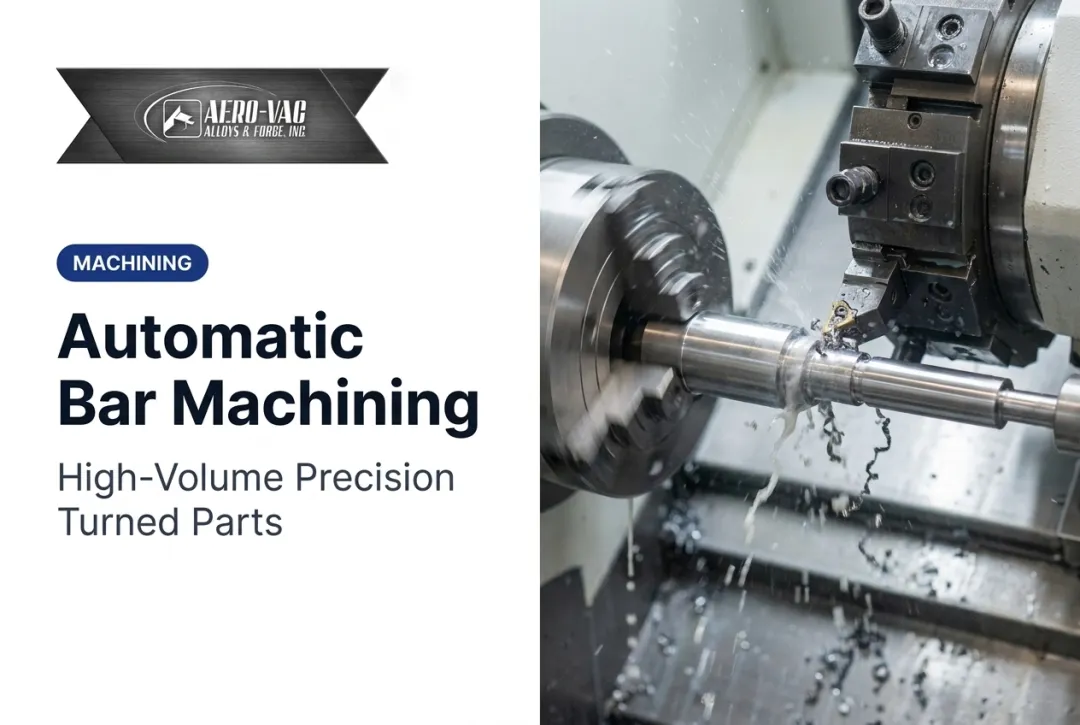
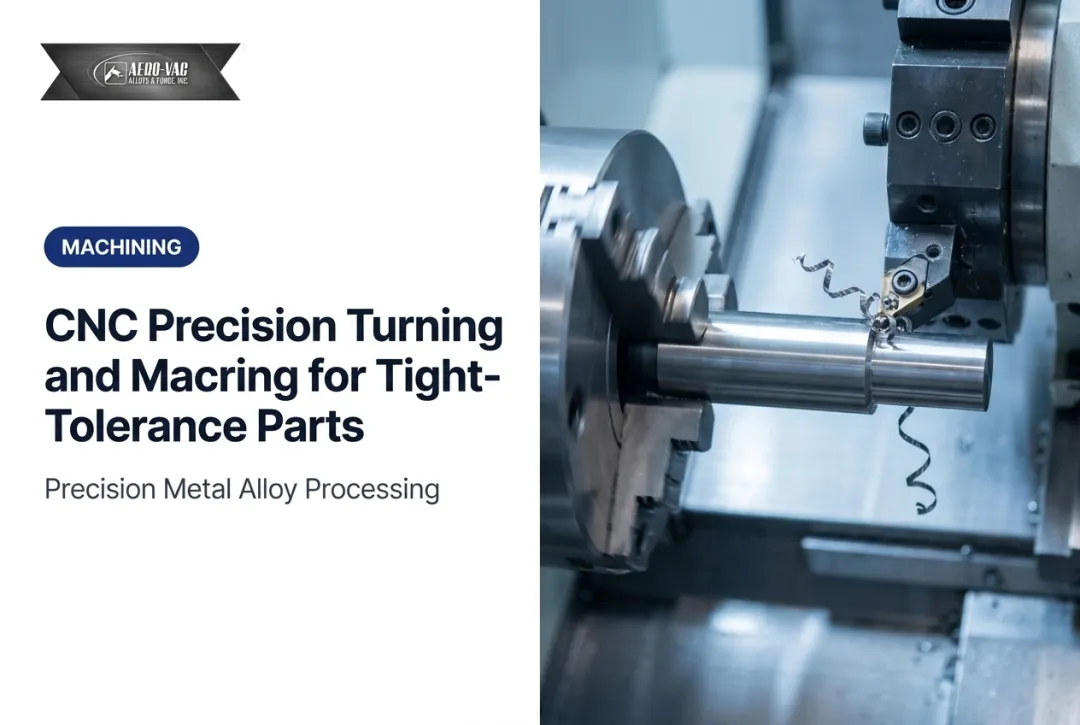
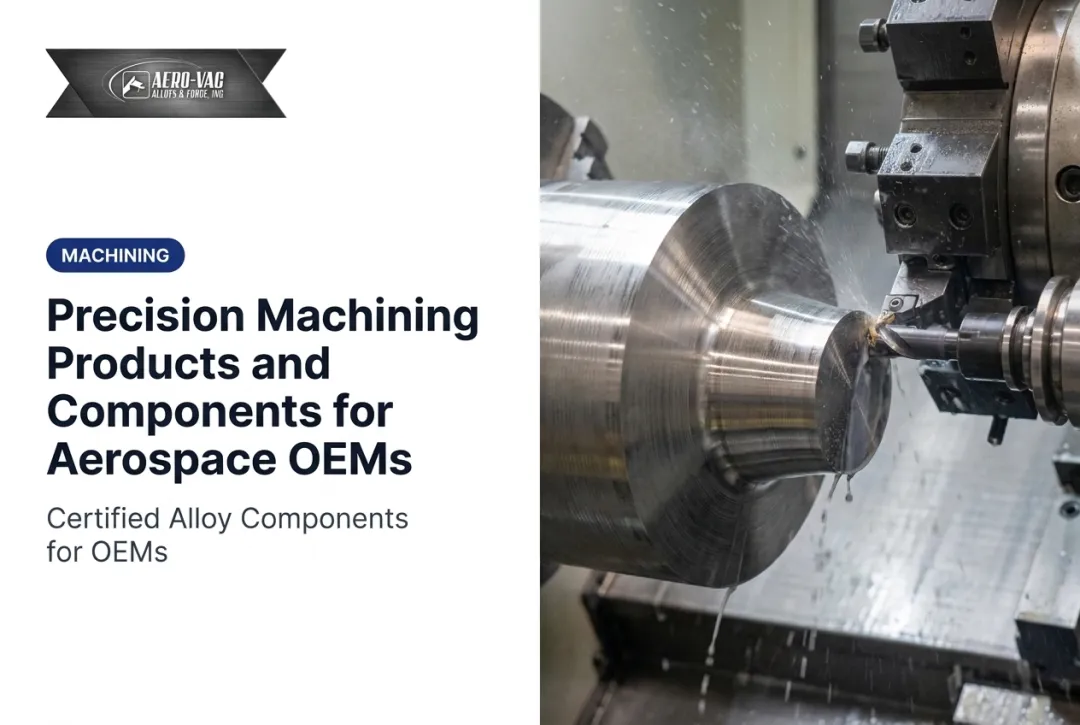
Lathe machining, commonly called turning, is a subtractive process. The workpiece spins on a central axis while a cutting tool removes material to create round, symmetrical shapes. Think shafts, pins, bushings, rollers — anything that needs to be perfectly cylindrical.
The defining principle is rotation plus feed. The workpiece rotates on the spindle; the tool advances along its surface to cut the desired diameter, face, thread, or groove. As Modern Machine Shop defines it, turning removes material from the outside diameter of a rotating workpiece. That is the core contrast with milling, where the tool rotates and moves instead of the workpiece.
You'll hear this process called several things in a shop:
- Turning — the technically correct, industry-standard term
- Lathe machining — the broader process description
- Round parts machining — a plain-language way buyers sometimes search for it
Manual vs. CNC: Two Control Modes, One Process
Manual lathes (engine lathes) rely on an operator to control feeds and speeds by hand. CNC lathes run the same physical process under programmed control. The Bureau of Labor Statistics occupational classification system separates these into distinct titles — CNC Machinist and Manual Lathe Machinist both appear under the broader Machinists occupation code.
CNC has become the standard for repeatable, tight-tolerance production runs, but manual lathes still earn their keep on prototypes, one-off repairs, and low-volume custom work where programming a CNC job doesn't pencil out.
Types of Lathe Machining Operations
Every lathe-turned part is built from a handful of core operations. Each one shapes a different feature, and each requires matching cutting speed, feed rate, and tool geometry to the material being cut.
The core operations:
- Turning: reduces the outer diameter of a cylindrical workpiece to create shafts, rollers, and pins
- Facing: squares off the end of a workpiece to create a flat reference surface
- Boring: enlarges an existing internal diameter to a precise tolerance, used for bushings and housings
- Threading: cuts external or internal helical grooves for screws, fasteners, and couplings
- Knurling: displaces material without cutting to form surface texture, often for grip
- Grooving and parting: cuts oil grooves and separates a finished part from the remaining stock

Why This List Matters for Material Selection
Boring isn't drilling — it enlarges a hole that already exists, and it demands a rigid setup to avoid chatter on longer bores. Knurling doesn't remove chips at all; it forms the material, which means the workpiece needs enough ductility to deform cleanly without cracking.
This is where raw material quality starts to matter. A bar with inconsistent hardness or hidden inclusions will chatter through a threading pass or tear instead of cutting cleanly during facing. Get the material wrong, and no amount of tool geometry tuning fixes it.
Types of Lathes Used in Machining Work
Not every job calls for the same machine. Lathe selection comes down to production volume, part complexity, and how many operations need to happen in one setup.
| Lathe Type | Best Suited For | Control Mode |
|---|---|---|
| Engine lathe | Prototypes, small-batch custom parts, repair work | Manual |
| CNC lathe | Production runs needing repeatability | CNC |
| Turret lathe | High-volume, multi-operation parts | Manual or CNC |
| Bench lathe | Small parts, light-duty work | Manual |

Engine lathes are the original manual lathe design — general-purpose machines still common in job shops handling prototypes or custom one-offs where CNC programming time isn't worth it.
CNC lathes run under computer control, which makes them the go-to for production runs where every part needs to match the last one.
Manufacturers publish tight axis-indexing specs on turning centers, but an indexing increment is not a guaranteed finished-part tolerance. Actual tolerance depends on the machine, fixture, tooling, and material together—not the control system alone.
Turret lathes (and related multi-tasking machines) hold multiple tools on a rotating turret, so a shop can run several operations—turning, boring, threading—without a full re-setup. That matters for complex parts in volume.
Bench lathes are compact manual machines for small parts and light-duty work, where a full-size engine lathe would be overkill.
Materials Commonly Used in Lathe Machining
A lathe-turned part is only as good as the bar stock feeding it. Inconsistent chemistry or hidden defects in raw material show up downstream as tool wear, dimensional drift, and scrapped parts, so material sourcing deserves real attention before a job ever hits the chuck.
Common lathe materials and their machining characteristics:
- Carbon and alloy steels: Good machinability; widely used for shafts and structural components
- Stainless steel: Among the more difficult-to-machine materials per SME; often needs slower speeds and specific tooling
- Titanium: Cutting forces, speeds, and fluid choice drive tool life, finish, and tolerance, per ASM International research
- Aluminum alloys: Fast to cut, though harder grades bring their own challenges
- Nickel-based superalloys: Tough on tooling; specified where high-temperature strength is non-negotiable
Certified Traceability Matters for Critical Work
Aerospace and defense-grade lathe work typically requires full material traceability, meaning verified chemistry, heat lot documentation, and mechanical property records, before a single chip gets cut. That's part of what AS9100 certification is built around.
This is where a supplier's back-office discipline matters as much as the metal itself. Aero-Vac Alloys & Forge, an ISO 9001 and AS9100-certified metal supplier, provides precision-cut alloy steels, forging steels, and specialty bar stock to turning shops, with just-in-time delivery that keeps production moving. The company also offers in-house turning and rough machining alongside raw material supply.

Bar stock options documented for precision work include:
- AMS 6419 300M/4340M low-alloy steel for drive-shaft parts and piston pins
- ASTM A108 cold-finished bar for tight-tolerance shafts and axles
Aero-Vac supplies manufacturers across aerospace and defense, including customers such as Boeing, SpaceX, and Lockheed.
Industries That Rely on Lathe Machining Work
Turned components show up anywhere a round, precise part needs to survive real-world load and stress.
- Aerospace and defense: shafts, bushings, and structural fittings held to strict material traceability standards
- Oil and gas: large-bore tubing and drive components, including martensitic stainless bar stock for high-temperature service
- Power generation: turbine shafts and related rotational components, often specified in high-temperature alloy grades
- Heavy trucking: drive components requiring durability under sustained load, commonly machined from alloy steels like 9310V
- Medical and motorsports: tight-tolerance rotational parts where precision and material consistency aren't negotiable

Aero-Vac supplies bar stock into several of these exact markets, including ASTM A565 bars for oil and gas and power-generation service, and AMS 6265 alloy steel bars used in heavy truck components.
Frequently Asked Questions
What are the different types of work done on a lathe machine?
Lathe machines perform turning, facing, boring, threading, knurling, grooving, and parting. Each operation shapes a different feature of a cylindrical workpiece, from outer diameter to internal bores to surface texture.
What is lathe work called?
Lathe machining work is most commonly called "turning." Machinists who specialize in this process are often referred to as turners or lathe operators, though "machinist" is the standardized occupational term.
What materials can be machined on a lathe?
Lathes handle carbon steel, stainless steel, alloy steels, titanium, aluminum, brass, and engineering plastics. Material choice directly affects cutting speed, tool selection, and achievable finish.
Is lathe machining the same as CNC turning?
CNC turning is the computer-controlled, automated version of traditional manual lathe machining. It offers higher repeatability for production volumes, though manual lathes still have their place for prototypes and one-offs.
Why does material quality matter in lathe machining?
Inconsistent chemistry or hidden defects in raw stock cause tool wear, dimensional drift, and scrapped parts. That's why certified material sourcing matters, especially for aerospace and defense work.
What industries use lathe-machined parts the most?
Aerospace, defense, oil and gas, power generation, and medical device manufacturing lead demand for precision lathe-turned components. These industries rely on tight tolerances and consistent material quality.